Ethan Crossfield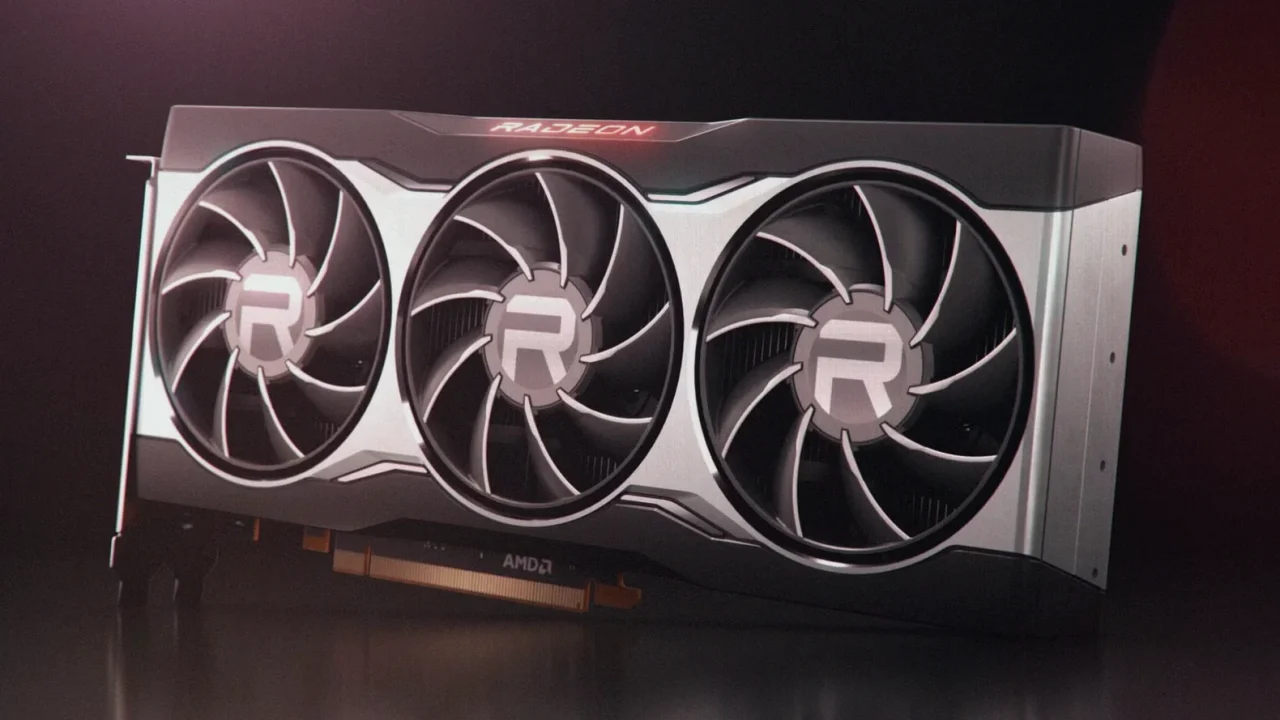
Shader compilation stutters and long load screens remain a frustrating constant for PC players—especially when new games ship with heavy shader workloads. Now, Microsoft’s Advanced Shader Delivery is expanding to supported AMD Radeon RX hardware, promising dramatically faster loads and fewer hitches in a growing list of titles.
How Advanced Shader Delivery speeds up AMD-based gaming PCs
AMD and Microsoft have partnered to roll out Advanced Shader Delivery across more gaming devices, with the goal of cutting both load times and shader stuttering. The core idea is to shift part of the shader compilation process away from the player’s device and into Microsoft’s cloud. Once a game is downloaded and installed, those pre-compiled shaders can be distributed to users, reducing the in-game time spent compiling shaders on the fly.
Microsoft says this approach can reduce load times by up to 95% in supported games, and it also targets shader stutter—one of the most common causes of “hitching” during early gameplay or after major scene changes.
Support is available on AMD graphics cards released in 2019 or later, aligning the feature with modern Radeon hardware that meets Microsoft’s requirements.
Which games are supported right now (and what the testing showed)
Microsoft’s June 11 developer blog update outlines a list of games supporting Advanced Shader Delivery on PC, available through the Xbox PC app. As of the update, the feature is available for 36 titles, with Microsoft pointing to several high-profile releases such as Final Fantasy 16, Starfield, and The Outer Worlds 2.
To illustrate the impact, Microsoft highlighted testing in Forza Horizon 6: a PC load time reportedly dropped from about 1.5 minutes to roughly four seconds when Advanced Shader Delivery was used. That test system used an AMD Ryzen 7 5800 CPU and a Radeon RX 7600 GPU—neither of which is described as current-gen—suggesting the benefit isn’t limited to only the newest hardware.
Microsoft also notes that the supported catalog should evolve as more developers integrate the technology, enabling their games’ shaders to be pre-compiled via Microsoft’s cloud servers.
Requirements for AMD users—and what it means for Nvidia players
Advanced Shader Delivery comes with specific system requirements. Users need Windows 11 version 24H2 or newer, plus Xbox Gaming Services version 37.113.11003.0 or higher. On the GPU side, Microsoft requires an AMD Adrenalin driver version 26.6.1 or later and an AMD graphics card with RDNA 1 architecture or newer. In practical terms, Radeon RX 5000 series cards are listed as the minimum.
While newer GPUs are still recommended for high frame rates and for taking advantage of features like ray tracing in supported titles, the key point is that the feature is designed to work across a broad slice of RDNA 1+ hardware.
For Nvidia owners, the situation is less certain. Nvidia previously stated in March that Microsoft Advanced Shader Delivery would be supported later in 2026, but no specific timeline was provided. With Nvidia’s strong position in the discrete GPU market, the competitive question is when—rather than whether—AMD’s advantage with this specific optimization will be matched.
Key points
- Advanced Shader Delivery moves shader compilation into Microsoft’s cloud to reduce stutter and load times
- AMD Radeon RX cards from 2019+ are supported, with RDNA 1+ GPUs required
- Microsoft claims up to 95% load-time reductions in supported games
- Nvidia support is expected later in 2026, but no exact window is confirmed
| Category | Confirmed details |
|---|---|
| Feature | Microsoft Advanced Shader Delivery |
| AMD GPU support | Radeon graphics cards released in 2019 or later; RDNA 1+ required (RX 5000 series minimum) |
| OS requirement | Windows 11 24H2 or newer |
| Driver/services minimums | Xbox Gaming Services 37.113.11003.0+; AMD Adrenalin 26.6.1+ |
Expert View
This rollout signals that “performance optimization” on PC is shifting beyond raw GPU horsepower. By pre-compiling shaders in the cloud, Microsoft and AMD are tackling one of the most hardware-agnostic sources of bad first-run experiences: shader stutter. If the supported catalog grows quickly, AMD-based players could feel a tangible quality-of-life advantage for new releases, potentially putting pressure on Nvidia to match the feature on its own timeline. For the community, it’s also a reminder that driver and platform-level systems can matter as much as game patches—especially for shader-heavy titles.