Ethan Crossfield
Fallout has officially expanded into a premium pinball release, with Stern launching three machines based on the franchise's games and Amazon television series. The entry-level Pro costs $7,299, while the Limited Edition reaches $13,999, making this one of the most expensive official Fallout products yet.
What happened
Stern revealed and released its Fallout pinball lineup on September 3 after a series of short teasers. The machines are now available through Stern distributors and dealers, with Pro models scheduled to ship in September. Limited Edition units are expected to follow from late September into early October.
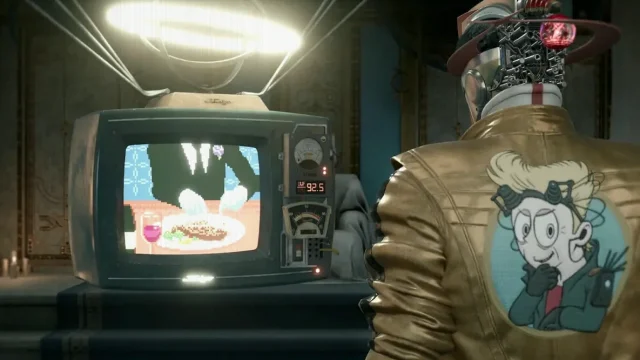
The table combines characters and story elements from across the franchise. Players can approach the wasteland through Lucy MacLean, The Ghoul, or Maximus, while familiar Fallout imagery includes Vault-Tec, Nuka-Cola, Power Armor, Vault Boy, and the Pip-Boy. The game also draws audio from Fallout 3, Fallout 4, and Fallout: New Vegas.
Its objectives include entering a Vault, searching for Wilzig's head, uncovering the secrets of Cold Fusion, and improving S.P.E.C.I.A.L. abilities while fighting through the wasteland. A Pip-Boy 3000 Mk. 5 LCD provides gameplay information and instructions, and the Insider Connected system tracks S.P.E.C.I.A.L. statistics and collected junk.
Why it matters
The Fallout machines arrive as the franchise reaches a much broader audience through its television adaptation. Stern's design treats the games and series as parts of one recognizable wasteland, using characters, locations, props, and mechanics that should appeal to longtime players as well as viewers who discovered Fallout on television.
The pricing, however, is likely to be the headline for many fans. Stern's Pro model is $300 more expensive than the $6,999 price attached to recent comparable machines. The Premium and Limited Edition models each rise by $1,000 against those recent prices. That places even the standard version well beyond the cost of a typical home entertainment purchase.
Hardware differences help explain the higher tiers. Premium and Limited Edition machines include a lower playfield, a Fat Man launcher and shooting gallery, a working Vault door, and Deathclaw features that are not part of the Pro model. The Limited Edition is restricted to 770 machines worldwide, referencing Fallout's Great War of 2077.
What to watch next
The immediate question is how many machines reach public arcades and similar venues. Fans who cannot justify a purchase may still be able to play Fallout pinball in locations across the United States, giving the release a route to a much wider audience than its price tags suggest.
Availability will also separate the three editions. Pro shipments begin first, while the two higher-priced models arrive later in the announced window. Collectors will be watching the 770-unit Limited Edition closely, particularly because its extra hardware and franchise tie-ins make it the most complete version of Stern's design.
For players, the practical choice is less about which Fallout story is included and more about whether the additional physical features justify the jump from Pro to Premium or Limited Edition.
Key takeaways for Fallout fans
- The Fallout Pinball Pro costs $7,299 and is scheduled to ship in September.
- Premium pricing is set at $10,699, with additional playfield and interactive hardware.
- The Limited Edition costs $13,999 and is capped at 770 machines worldwide.
- All three versions blend the Fallout games with characters and elements from the television series.
- Arcades and similar venues may offer the most accessible way to play outside private ownership.
Fallout pinball editions and prices
| Edition | Price | Notable details |
|---|---|---|
| Pro | $7,299 | Core Fallout pinball experience |
| Premium | $10,699 | Adds a lower playfield, Fat Man launcher and shooting gallery, working Vault door, and Deathclaw features |
| Limited Edition | $13,999 | Includes the Premium hardware and is limited to 770 machines worldwide |
Expert View
Stern's Fallout release is a strong example of how a successful game franchise can move into high-end physical entertainment, but its pricing makes it a collector product rather than a mainstream gaming accessory. The crossover design is smart: the television series gives the machine fresh visibility, while the game references provide depth for established fans. Its real reach will depend on arcade placement, where players can experience the table without paying five figures for a machine.