Ethan Crossfield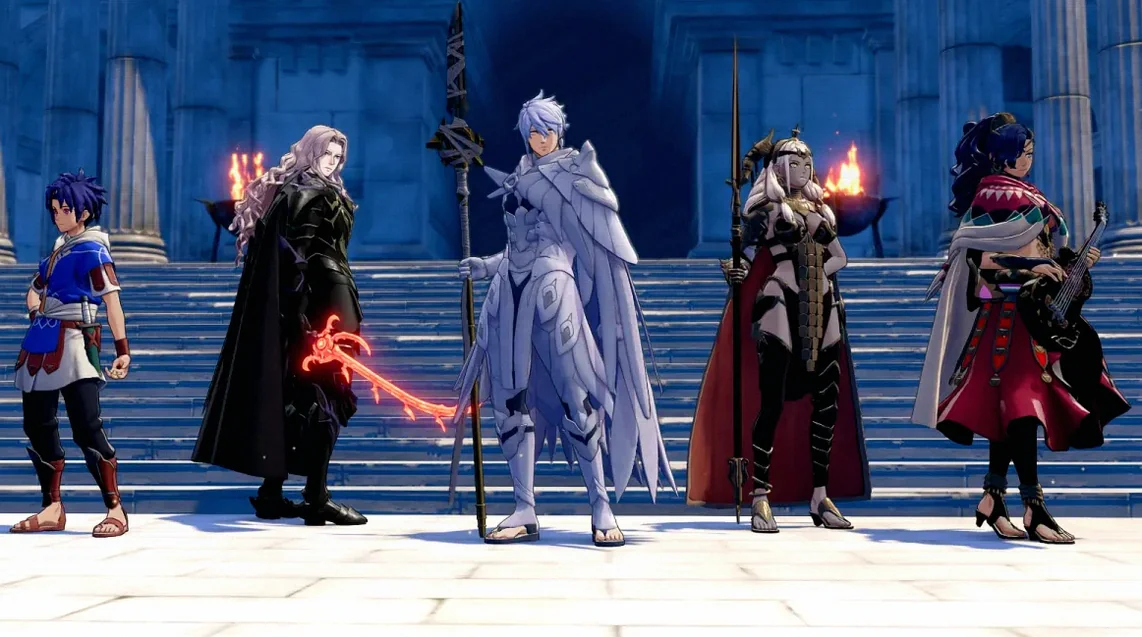
Nintendo’s 20-minute Fire Emblem: Fortune’s Weave Direct delivered more than a gameplay overview. Alongside details on combat, classes, exploration, and life between matches, the presentation revealed that the game’s four apparent heroes are part of a larger time-travel story—and that its real protagonist has not yet been named.
What happened in the Fortune’s Weave Direct
Fortune’s Weave begins with Cai, Dietrich, Theodora, and Leda entering the Heroic Games, a gladiator-style tournament that can grant a winner’s wish. Players can switch between the four protagonists whenever they choose, with each character’s progress saved separately. Their stories unfold in parallel, reinforcing the game’s focus on intersecting destinies.
The Direct revealed that this opening era takes place in the past. Five years after the events being influenced, the world has been devastated by the returning demon god Balor. Sothis, the progenitor god, summons a nameless, white-clad hero who can stop Balor. Rather than confront the threat alone, this true protagonist travels into the past and attempts to shape the four champions’ futures so they can unite when the final crisis arrives.
Why the combat and class systems matter
Arena battles use a traditional Fire Emblem battlefield, with players selecting units and positioning them carefully. Weapon types include swords, gauntlets, spears, axes, bows, and magic, with some weapons taking unusual forms, including guns. Combat Arts provide stronger attacks while reducing weapon durability. Blaze Arts offer character-specific abilities but consume HP, creating another resource decision during difficult encounters.
The class system is divided into Beginner, Specialty, and Advanced tiers. Beginner classes establish core battlefield roles, Specialty classes add more focused abilities, and Advanced classes combine powerful skills with distinctive mobility or defenses. Players can pursue new classes through certification exams, provided their units meet the required skill conditions.
A rewind feature lets players return to an earlier point in a battle after making a mistake. That should make experimentation less punishing, while durability and HP costs still give every aggressive decision a consequence.
What to watch next before launch
Free Time expands the game beyond its matches. Players can train, observe rivals for information, shop for weapons and upgrades, volunteer at temples for temporary combat buffs, and complete timed quests for townsfolk. Some citizens can be recruited after receiving gifts or sharing a meal. Inns provide lodging, food, time-passing, and automatic resource gains, while conversations between bonded characters develop their relationships.
The world map outside Dagsion adds towns, treasure clues, random encounters, and dungeons containing materials and other rewards. Dungeon fights are notable because they use traditional turn-based battles rather than grid-based positioning.
Nintendo Music will receive selected Fortune’s Weave tracks, including the main theme. Nintendo Today will add Fire Emblem themes and pre-launch information, followed by a new Ask the Developer article on September 15. Fortune’s Weave launches for Switch 2 on September 17.
Key takeaways for players
- The four tournament protagonists are not the game’s ultimate central hero.
- The main story connects a ruined future with a past that can still be changed.
- Combat rewards careful use of durability, HP-based Blaze Arts, and rewind opportunities.
- Certification exams, quests, recruitment, and bonding make preparation between battles strategically important.
- Dungeon encounters will offer a different structure from the game’s grid-based arena battles.
Fortune’s Weave class tiers
| Tier | Role | Examples |
|---|---|---|
| Beginner | Foundational combat roles | Gladiators, diviners, ornius riders |
| Specialty | Focused abilities and battlefield functions | Armored knights, wing soldiers, charioteers |
| Advanced | Highly specialized and powerful units | Cataphracts, guardians, elephant riders |
Expert View
The strongest reveal is not simply the time-travel twist; it is how that premise gives the four protagonists’ separate campaigns a clear strategic purpose. If the parallel narratives remain meaningfully distinct, Fortune’s Weave could make switching characters feel essential rather than cosmetic. The combination of flexible classes, rewindable battles, and substantial non-combat preparation also suggests a game built for tactical experimentation, while the future-facing mystery gives players a reason to see every thread through to the end.