Ethan Crossfield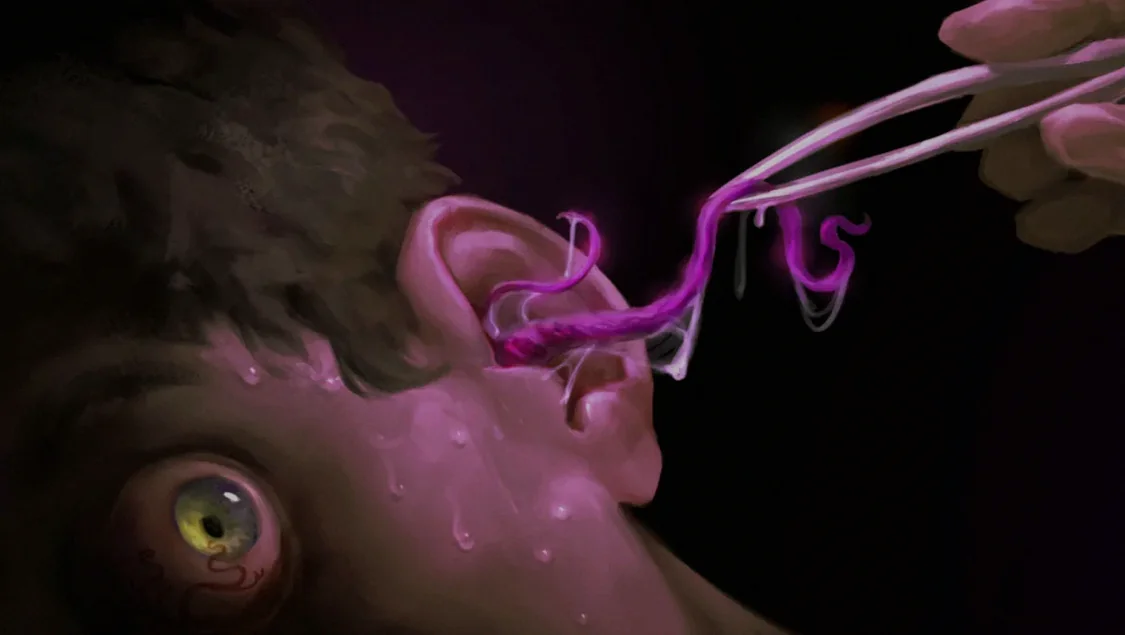
Critical Reflex has built a reputation for publishing unusual, memorable indie games, with Mouthwashing, Buckshot Roulette, and Arctic Eggs among its recent standouts. At Tokyo Game Show, the publisher brought that same appetite for the strange to a neon-punk bunker-style booth. Four demos stood out after hands-on sessions: Tiny Chills – Not From Ear, Grobnopolis | Last Days, Sated, and Flawless Abbey.
A publisher leaning into the unusual
Critical Reflex was founded six years ago and has steadily assembled a catalog that favors distinctive concepts over familiar formulas. Its TGS lineup continued that approach, moving between body horror, oppressive mystery, monster-focused cooking, and surreal dream exploration. Each demo had a clear hook, but the strongest impression came from how differently the games used atmosphere and interaction to create discomfort or curiosity.
Tiny Chills and Grobnopolis make horror feel personal
Tiny Chills – Not From Ear was the most physically unpleasant demo of the group, and that is central to its appeal. Set in a small town plagued by earthquakes and disappearances, it places the player in an ear-cleaning clinic run by their mother. First-person tools remove wax, insects, monsters, and other obstructions from patients’ ear canals. The wet sound design and grimy visuals make the routine work increasingly difficult to stomach, while events at home suggest that the family and the town are hiding something. Catching a wandering crow and investigating the mother’s disappearances add to the unease beyond the clinic.
Grobnopolis | Last Days takes a slower, more atmospheric route. In 1983, the player works as an apartment caretaker in Huta-Grobno, where smoke from a mining disaster is smothering the town. A radio provides fragments of opera, worker conversations, warnings, and information about a powerful Church presence. The apartment block’s residents seem suspicious without being openly threatening, while a growing crack in the kitchen whispers from somewhere below. The spreading red substance called Soup and the town’s evacuation efforts point toward a mystery buried beneath the city.
Sated turns feeding monsters into a roguelite gamble
Sated may have the clearest immediate gameplay loop. Monsters place orders, and the player gathers symbolic ingredients from a refrigerator that works like a random-draw machine. Recipes do not provide exact quantities; instead, players estimate the right proportions using an ambiguous meter. A successful meal earns a reaction score before the player moves across an underground train’s roguelite map. A failed dish can have much worse consequences, as one run ended with the player becoming the meal. The combination of repetition, risk, and grotesque food preparation gives Sated a strong foundation for future runs.
Flawless Abbey points toward a larger dream mystery
Flawless Abbey is the most visually expansive of the four. Players act as dreamseekers in a purple-and-grey facility, entering pods that connect them to an obelisk called a dream-tower. The demo moved from workplace troubleshooting into a star-filled train journey, where environmental puzzles and symbolic clues opened new paths. Dialogue choices appeared designed not only to define the character, but also to probe the player. Its painterly art and unusual music create a compelling first impression, while the promised corporate structure, frightened assistant, other dreamseekers, and threat to the tower suggest a much broader mystery.
Key points
- Tiny Chills combines ear-cleaning simulation with unsettling small-town horror.
- Grobnopolis builds its mystery through radio broadcasts, smoke, and a spreading underground substance.
- Sated mixes randomized ingredients, monster customers, and roguelite progression.
- Flawless Abbey uses dream exploration, environmental puzzles, and surreal presentation.
Expert View
The lineup shows why Critical Reflex stands out in the indie publishing space: its games are easy to describe, but difficult to confuse with one another. None of these demos relies on conventional genre presentation. Instead, each turns an ordinary activity—cleaning, caretaking, cooking, or office work—into a gateway for horror and mystery. For players looking beyond established franchises, that variety makes all four worth following as more details emerge.