Ethan Crossfield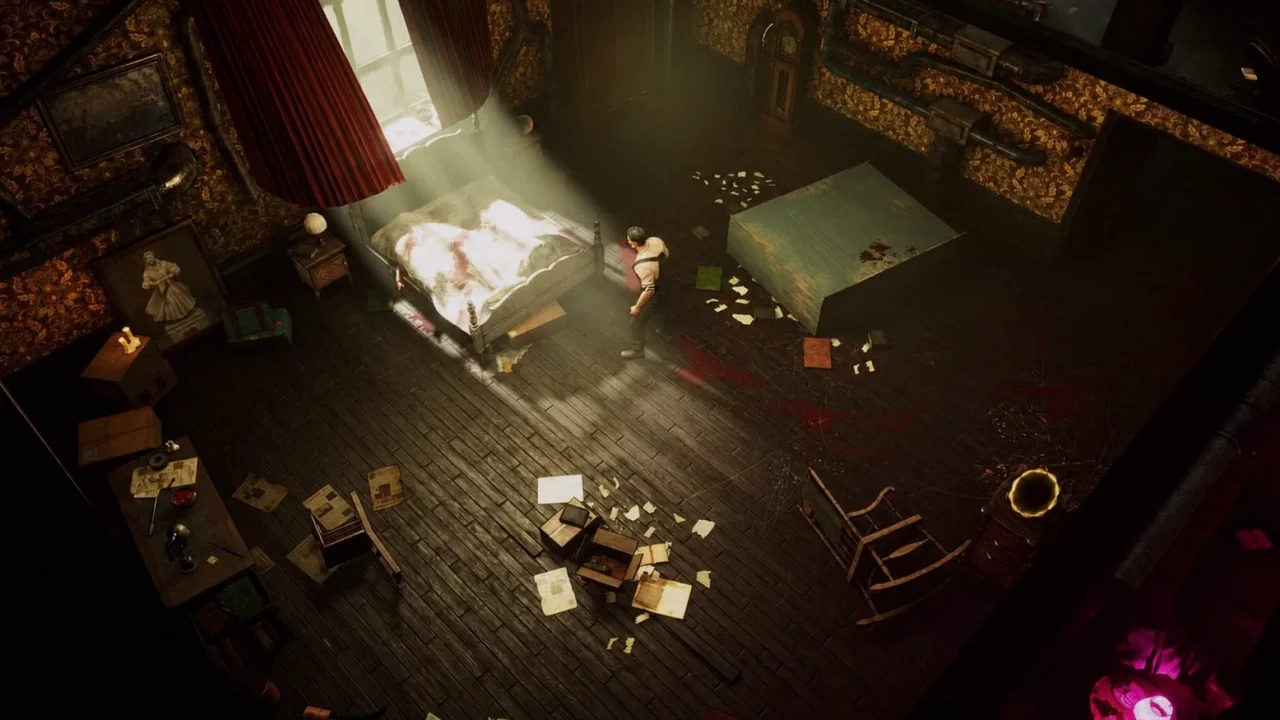
Steampunk remains an underused setting in games, despite the genre’s strong visual identity and natural fit for political intrigue. Glasshouse aims to explore that space with a Steam CRPG built around investigation, ideological choices, and a world on the edge of war. Its presentation recalls Dishonored, while its emphasis on dialogue and character systems may appeal to players who still want a successor to Disco Elysium.
A Murder Investigation in a World Near Collapse
Glasshouse takes place in Lundonstoch, a cramped working-class apartment complex filled with pipes, hidden spaces, puzzles, and residents whose political beliefs shape every interaction. The game’s fictional history diverges sharply from reality: states and nations disappeared in 1828, technological progress stalled, and capitalism was abandoned. By 2028, the resulting world is divided between struggling Sterile Fiefdoms and a smaller group of Productive territories. Revolt is approaching, and the threat of a wider war hangs over the setting.
Players control Wealdmear, a deputy who wants to become a respected leader. The immediate task is to investigate a mysterious triple murder next door, but the larger story involves political conspiracy and the consequences of trying to lead a fractured society. The premise gives Flat28 room to address mature themes without limiting the game to a conventional detective plot.
Politics Becomes the Game’s Core Skill System
Glasshouse does not copy Disco Elysium’s talking internal skills directly. Instead, Wealdmear has an inner Ego and a narrator that frames events as though they are part of a play. The central progression system is a Political Compass built around five ideologies. Developing particular beliefs can make conversations with some characters easier while creating friction with others, producing alternate routes through social encounters.
Dialogue is not merely a way to gather information. Players can use items to unlock special conversation paths through the Cunning mechanic, and careful exploration may reveal ways to make enemies surrender without fighting. That flexibility is paired with a substantial turn-based combat system, meaning players can negotiate when possible but still choose force when conversations fail. Character development also includes reading books for knowledge and crafting equipment in a workshop.
Eight Endings Give the Investigation Longer-Term Consequences
The combination of ideological progression, branching dialogue, investigation, and combat is designed to make choices matter beyond individual encounters. Glasshouse advertises eight different endings, offering different outcomes for its post-capitalist world and for Wealdmear’s ambitions. The game’s setting also supports the Dishonored comparison through its stylized, industrial atmosphere, although its structure is closer to a dialogue-heavy CRPG than a pure stealth experience.
Glasshouse is currently listed on Steam as coming soon, with no firm release date announced. Players interested in its political mystery, turn-based battles, and steampunk setting can wishlist it now. Until more details arrive, the quality of its writing and voice performances will remain the biggest unanswered questions, especially given the high standard established by Disco Elysium.
Key points
- Glasshouse is an upcoming Steam CRPG from Flat28 with a steampunk-inspired setting.
- Players investigate a triple murder while navigating a society divided by political ideology.
- Dialogue, a five-ideology Political Compass, exploration, and turn-based combat shape progression.
- The game features eight endings and currently has no confirmed release date.
Expert View
Glasshouse signals continued interest in CRPGs that treat dialogue and worldbuilding as major gameplay systems rather than decoration. Its political skill model could help it stand apart from standard detective adventures, while the option to combine negotiation with turn-based combat broadens its appeal. For the wider PC community, the project also highlights how smaller studios are using distinctive settings and branching narratives to compete for attention without relying on familiar fantasy or science-fiction formulas. Its next major test will be proving that its ambitious systems support consistently strong writing.