Ethan Crossfield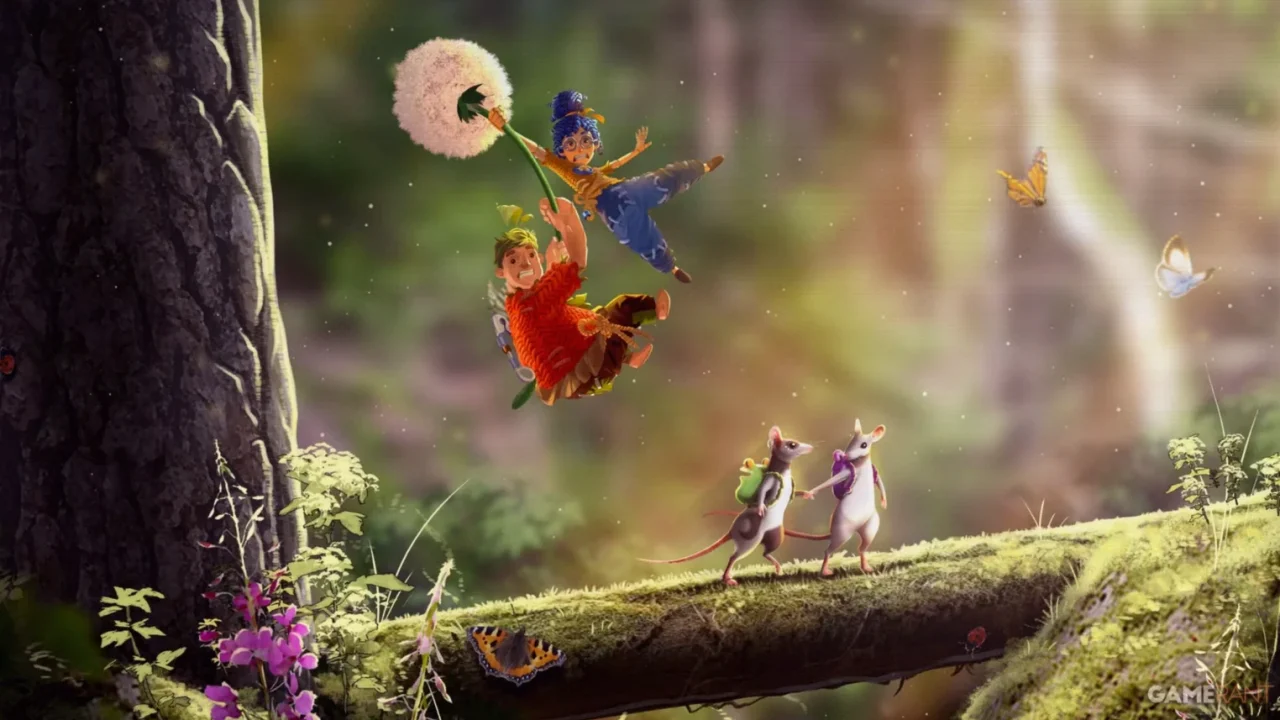
Co-op gaming on Steam has never been more varied, but there’s still a clear gap for players who want something warm, teamwork-driven, and easy to jump into with friends. Hela: of Mice and Magic aims straight at that sweet spot—offering a mouse-centered adventure with It Takes Two-style teamwork, plus an open-world traversal twist.
A co-op adventure built for teamwork—and for everyone else, too
Hela: of Mice and Magic is positioned as a relaxing, charming co-op alternative for groups that don’t necessarily want horror scares or loud, proximity-chat chaos. Visually and structurally, it leans into the same “storybook co-op” energy fans associate with It Takes Two, including semi-realistic environmental design and two small characters to control.
The core concept is straightforward: players take on the role of a brave mouse, exploring a bright, story-forward world filled with environmental puzzles. The game emphasizes realistic physics—especially when it comes to building platforms for one another—and it expects coordinated problem-solving, not solo button-mashing.
Where Hela differentiates itself is its flexibility. While it offers two-player local split-screen co-op, it also includes a four-player mode. Even more importantly, the game is designed so solo players aren’t left out. Instead of forcing puzzles to be rewritten around different party sizes, developer Windup created a “Shade” system: players can summon shadowy mouse clones to stand in place, hold items, and help complete tasks that would normally require additional players.
Open-world exploration with movement that feels Spider-Man-adjacent
Beyond its co-op-friendly puzzle framework, Hela leans into exploration by giving players a single open world rather than a set of separate levels. The setting is inspired by northern Sweden, and the game’s traversal is built around climbing, scaling structures, and swinging through the environment.
Movement is where the Spider-Man comparisons come in. The mice use abilities tied to a magic backpack, delivering web-slinger-like momentum: they can swing around the world, flip in the air, and perform trick-like maneuvers. There’s also a glide mechanic described as reminiscent of web wings, expanding the range of how players can move between puzzle spaces and scenic viewpoints.
The open-world structure complements the puzzle design. As players roam at their own pace, they’re expected to uncover environmental challenges that rely on realistic physics and on the cooperative (or solo Shade-assisted) creation of solutions.
What to watch next as the release window approaches
On its Steam page, Hela: of Mice and Magic indicates a target release in Q4 2026. That timeline matters for co-op audiences because it places the game squarely in the next wave of co-op releases—at a moment when players are actively looking for alternatives to shorter, two-person-only experiences.
If the Shade system delivers as described, Hela could appeal simultaneously to couples, small groups, and solo players who want the same teamwork feel without being locked out by party size. And with its open-world traversal, it may also attract players who care as much about movement and exploration as they do about puzzles.
Key points
- Hela offers 2-player local split-screen co-op and a four-player mode, while still supporting solo play.
- Its Shade system lets solo players create shadow clones to perform tasks normally requiring additional players.
- The game features an open world inspired by northern Sweden, with climbing, swinging, and gliding traversal.
- Environmental puzzles rely on realistic physics, including building platforms and coordinating actions with teammates (or Shades).
Confirmed co-op and solo structure
| Mode | How it works (per details provided) |
|---|---|
| Solo | Shade system creates shadowy mouse clones to help with tasks and item interactions. |
| Local co-op | Two-player split-screen co-op for couch play. |
| Online co-op | Up to four players co-op (described as available online). |
| Puzzle approach | Realistic physics and environmental puzzles require coordinated problem-solving. |
Expert View
Hela: of Mice and Magic signals a clear market preference for co-op experiences that scale beyond “two players or nothing.” By combining an It Takes Two-like teamwork structure with an explicit solo solution (Shade clones) and adding open-world traversal, it targets both the social co-op crowd and players who usually miss out due to limited party size. If Windup’s approach to solo parity holds up in practice, it could push more co-op designers to treat solo play as a first-class feature rather than an afterthought—especially as open-world movement becomes a bigger differentiator for attracting new audiences.