Ethan Crossfield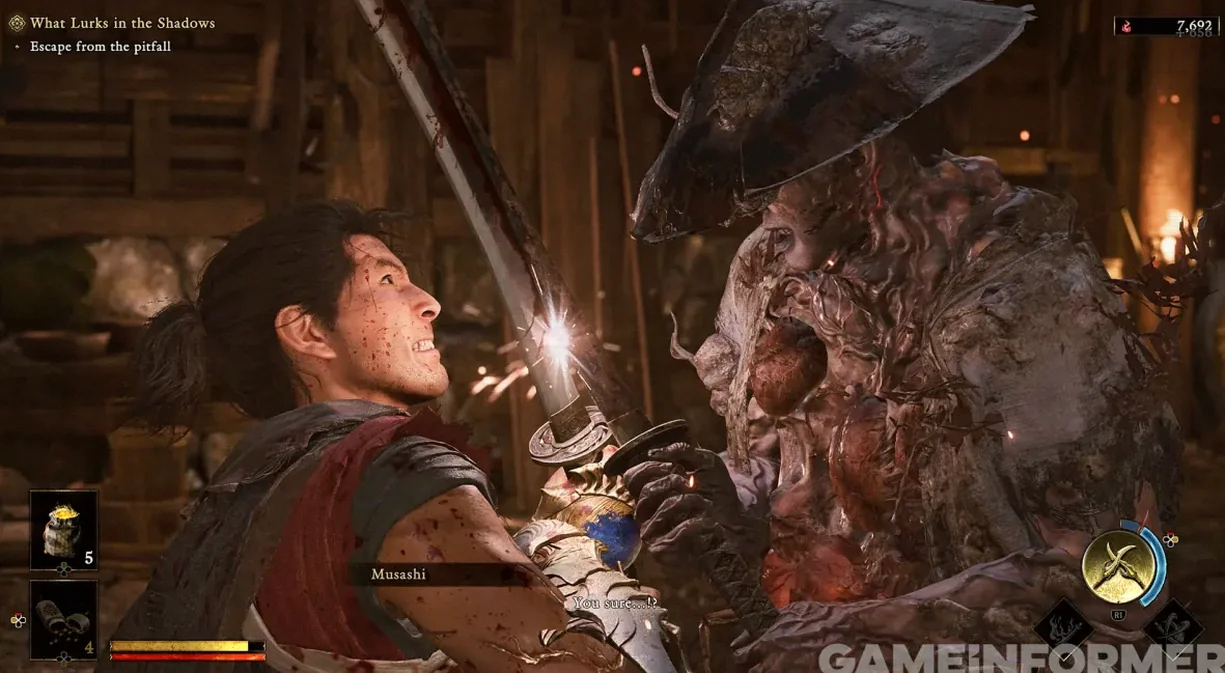
After two decades away, Onimusha: Way of the Sword is returning with a combat system designed to preserve the series’ identity while making its most dramatic moments playable. Capcom developers told Game Informer that the goal is to bring the cinematic intensity of earlier Onimusha games into every encounter, supported by research into historical swordsmanship, film choreography, and modern action-game controls.
What happened to Onimusha’s combat
Director Satoru Nihei and animation team lead Hiroshi Yugen explained that Way of the Sword began with a close examination of the older games. Yugen, a 30-year Capcom veteran working on Onimusha for the first time, studied samurai combat from Edo-period Japan, the fundamentals of sword duels, and the work of professional fight choreographers.
Samurai cinema was another major reference point. The team reviewed films featuring Toshirō Mifune, who provides the likeness for protagonist Miyamoto Musashi, along with a wider range of movies that showed both spectacular swordplay and quieter human moments. The intention was not simply to make attacks look stylish, but to understand the purpose and physical logic behind each movement.
That approach is especially visible in the updated Issen system. The counterattack still requires players to strike at the moment an enemy attacks, but Way of the Sword presents the action with more readable, grounded animations. The move remains difficult to execute, instantly defeating smaller enemies and heavily damaging larger ones. Capcom has created roughly 10 Issen variations for attacks arriving from different directions.
Why it matters after a 20-year gap
The long absence gave Capcom plenty of opportunity to rethink how Onimusha should play in the current action-game landscape. However, the studio did not want modernization to erase the series’ foundations. Issen and Chain Issen return, while the new Blade Barrage expands Musashi’s offensive options.
Defense also received an unusually detailed animation overhaul. Nihei challenged Yugen to make blocking from many angles look believable rather than allowing Musashi to appear fixed in place. The resulting system accounts for attacks from high and low positions, behind the character, and from multiple side angles. It was demanding to implement, but it gives defensive movement a stronger physical presence.
Capcom is also offering two control styles. Aggressive places core attacks on the face buttons and is intended for players who prefer taking the initiative. Defensive moves blocking to L1 and adjusts other inputs to make parries and defensive actions more approachable. Including both schemes lets experienced action players and more cautious newcomers tailor the game to their preferred rhythm.
What to watch next
Players can currently sample both control types through the Way of the Sword demo on PlayStation 5, Xbox Series X/S, and PC. Nintendo Switch 2 is also listed as a launch platform for the game, but the source notes that no demo is available there.
The demo should provide the clearest early test of Capcom’s central design bet: whether more expressive animations and flexible controls can make precise swordplay feel both cinematic and responsive. Future coverage is expected to explore additional gameplay and behind-the-scenes material, including content from the hands-on session in Osaka.
Key takeaways for players
- Issen remains the hardest and most rewarding combat technique, with different versions based on attack direction.
- Blocking is supported from a wide range of angles through a dedicated animation system.
- Aggressive controls favor offense, while Defensive controls make blocking and parrying easier to access.
- The demo is available on PlayStation 5, Xbox Series X/S, and PC.
- Nintendo Switch 2 will have no demo according to the provided information.
Way of the Sword control options
| Control type | Designed for | Main emphasis |
|---|---|---|
| Aggressive | Players comfortable with action games | Face-button attacks and offensive momentum |
| Defensive | Players who prefer a cautious approach | L1 blocking and more accessible defensive actions |
Expert View
Capcom’s strongest decision is treating authenticity and accessibility as complementary rather than opposing goals. The detailed blocking work and grounded Issen animations suggest a serious attempt to make swordplay feel intentional, while the two control schemes reduce the barrier to entry without removing the demanding timing that defines Onimusha. If the responsiveness matches the visual ambition, Way of the Sword could make its 20-year return feel like a genuine evolution instead of a nostalgia-driven revival.