Ethan Crossfield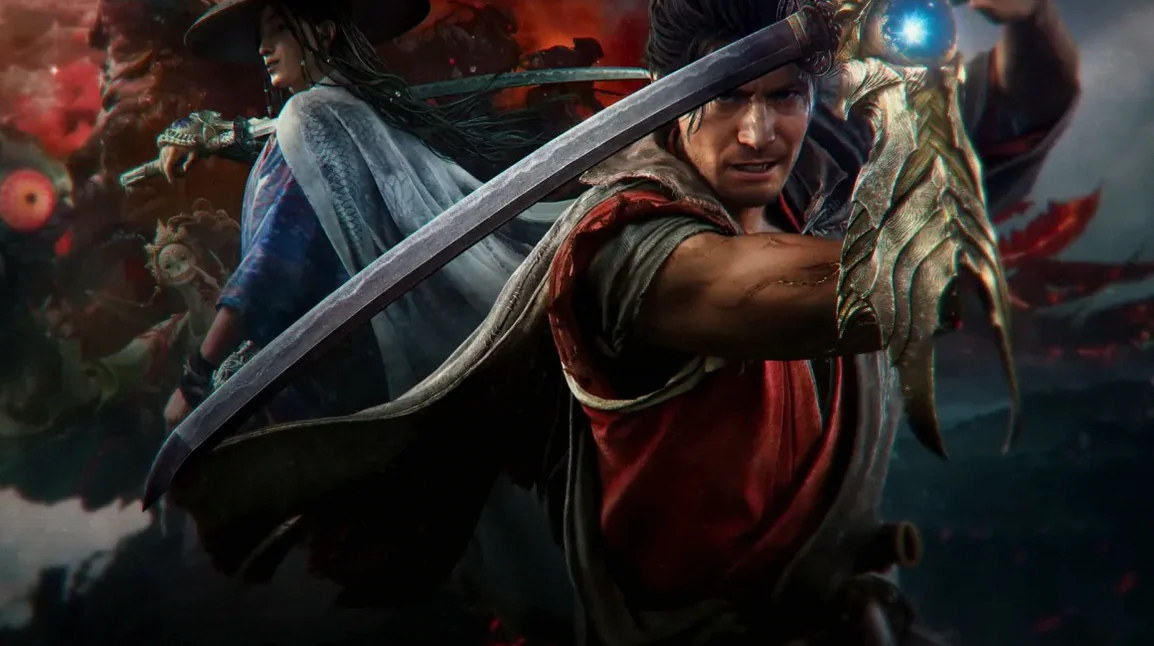
Historical warriors are often remembered through polished legends, but games can use those stories to build characters who still feel unfinished and human. That is the approach Capcom is taking with Miyamoto Musashi, the protagonist of Onimusha: Way of the Sword. Animation lead Hiroshi Yugen explained that the game draws from Musashi’s real reputation, famous anecdotes, and mythologized image while presenting him early in his development as a swordsman.
A younger Musashi before the famous twin blades
Way of the Sword takes place when Musashi is in his 20s, before he has fully developed the dual-wielding style associated with his later legend. As a result, the game emphasizes one-sword combat rather than presenting him as a finished master. Capcom still wanted to reflect his broader weapons knowledge, which is represented through the Oni Armament system.
The approach gives the protagonist room to grow. Musashi is already dangerous, but his techniques are not meant to look completely refined. Yugen said the team deliberately gave his movements a rougher, less-defined quality to match this point in his life.
Weapons, furniture, and fire all become part of the fight
Musashi’s combat kit is built around the idea that victory matters more than fighting with a sword alone. In the hands-on session described by the source, the Two Celestials provided direct damage with their small blades, while the Earth-Shaker hammers were better at producing heavy stagger. Choosing the right Oni Armament for an enemy is therefore an important part of combat strategy.
The environment also supports Musashi’s improvisational style. Players can parry enemies into torches and set them alight, use tables as shields, then throw those tables to disrupt opponents. These mechanics reflect stories in which Musashi supposedly used every available advantage rather than adhering to a strict code of formal swordplay.
Swagger shapes how Musashi moves and thinks
Unlike earlier Onimusha heroes such as Samanosuke and Jubei, who use Oni power while pursuing world-saving goals, Way of the Sword’s Musashi is primarily interested in finding his next duel. He even regards the Oni Gauntlet as an unfair advantage and wants to remove it, reinforcing his pride as a swordsman.
Capcom communicated that attitude to its motion-capture performers. The animation team used Street Fighter as a reference point for thinking about how Musashi enters an encounter, approaches an opponent, and carries himself before the action begins. His walk was designed with swagger rather than constant tension, while his direct and impatient personality is meant to show through without much restraint.
What this means for the new Onimusha
This version of Musashi gives Capcom a protagonist who can evolve across the adventure instead of arriving as an untouchable legend. His imperfect technique, unconventional tools, and blunt personality distinguish him from the series’ previous leads while keeping the franchise’s supernatural swordplay intact.
A playable demo already offers a look at that characterization, and further hands-on impressions will depend on how effectively the full game shows Musashi changing as both a fighter and a person.
Key points
- Musashi is portrayed in his 20s, before mastering his famous dual-wielding technique.
- Oni Armaments expand his options beyond standard one-sword attacks.
- Environmental objects can be used defensively and offensively during fights.
- Capcom used Street Fighter-inspired thinking to shape his swagger and combat presence.
Expert View
Capcom’s interpretation suggests that Way of the Sword is treating Musashi as more than a historical name attached to a supernatural action game. By making him skilled but unfinished, the studio creates a clear character arc and a reason for players to pay attention to his development. The emphasis on improvised tools and personality also helps separate this comeback from earlier Onimusha protagonists, giving the revived franchise a stronger individual identity.