Ethan Crossfield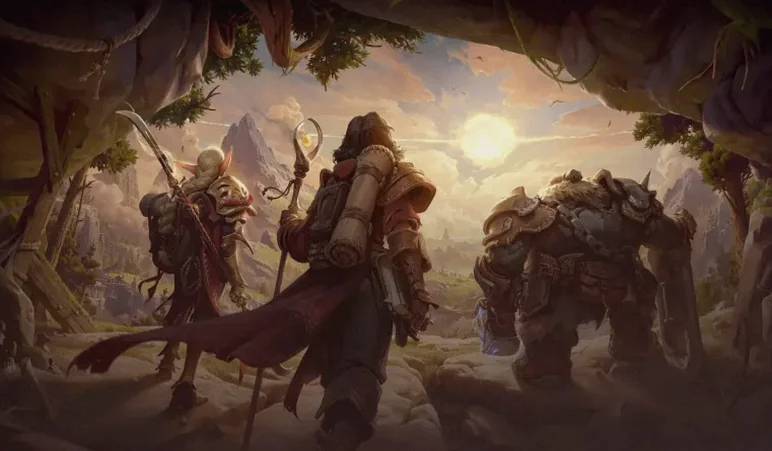
IO Interactive has regained full ownership of its online RPG Project Fantasy after its external funding partner—confirmed to be Xbox—pulled out last week. The studio says it will now self-fund, but that independence comes with layoffs and the closure of a subsidiary studio.
What happened
IO Interactive, the Copenhagen-based developer behind Hitman and 007 First Light, announced that it has taken full control of Project Fantasy, an in-development online RPG. The change follows the studio’s split from an outside funding partner, which was later confirmed to be Xbox.
In its update to the public, IO says Project Fantasy will continue under its direction, but the funding shift forces a staffing reduction. The studio frames the move as a need to “rebalance” its long-term future: prioritizing the success of its main internal core titles rather than relying on external projects and potential mobile offshoots.
To achieve this new structure, IO says it has already made difficult decisions, including layoffs it previously described as necessary after Xbox stopped supporting the project. IO also points to the closure of its Istanbul subsidiary studio as part of the changes.
Why it matters
For IO, Project Fantasy is not a side bet—it’s positioned as a game, world, and intellectual property the studio is fully committed to. The company argues that keeping Project Fantasy on its own “passion and direction” requires restructuring now, even though the company acknowledges the impact on employees.
The broader context is a major Xbox-led portfolio adjustment. Xbox told Bloomberg it stopped supporting Project Fantasy after reevaluating the kinds of projects it wanted to invest in. That decision lands alongside reports of a large-scale corporate restructure that includes plans to lay off 3,200 employees over the next fiscal year, with 1,600 reportedly terminated immediately.
As part of that same restructuring, Xbox also spun off or sold multiple development studios, including Compulsion Games, Double Fine Productions, Ninja Theory, Undead Labs, and Arkane Studios. Against that backdrop, IO’s situation reflects how quickly long-term development plans can change when a major publisher’s investment priorities shift.
What to watch next
With ownership restored to IO and funding moving in-house, the next phase will be about execution: how IO calibrates Project Fantasy’s scope and staffing after the reduction. The studio has signaled that it wants the project to have a stronger foundation under its own control, but it has also made clear that this approach requires focusing resources.
Players and fans should watch for signs of how IO balances Project Fantasy with its core internal titles, since the studio explicitly links the restructuring to long-term stability. For those tracking the studio’s momentum, IO’s most recent release, 007 First Light, remains an important reference point for understanding what the company considers its current direction—especially as it prepares to carry Project Fantasy forward independently.
Practical takeaways
- IO Interactive now fully controls Project Fantasy after Xbox stopped funding the project.
- Expect staffing reductions tied to the studio’s new self-funding plan.
- IO has closed its Istanbul subsidiary as part of the restructure.
- Project Fantasy’s future will likely be shaped by IO’s priority shift toward core internal titles.
- The decision reflects wider Xbox portfolio changes and a major layoff plan reported by Bloomberg.
Expert View
IO’s regain of Project Fantasy ownership is a win for creative control, but it’s also a reminder that independence can be expensive. By self-funding, IO is betting that a sharper internal focus can sustain a long-running online RPG—yet the layoffs and Istanbul closure show the human cost of that pivot. For players, the key question is whether IO can protect the project’s ambition while reallocating resources toward its core pipeline. For the scene, this is another case where publisher investment decisions ripple outward into studio structure, timelines, and workforce stability.