Ethan Crossfield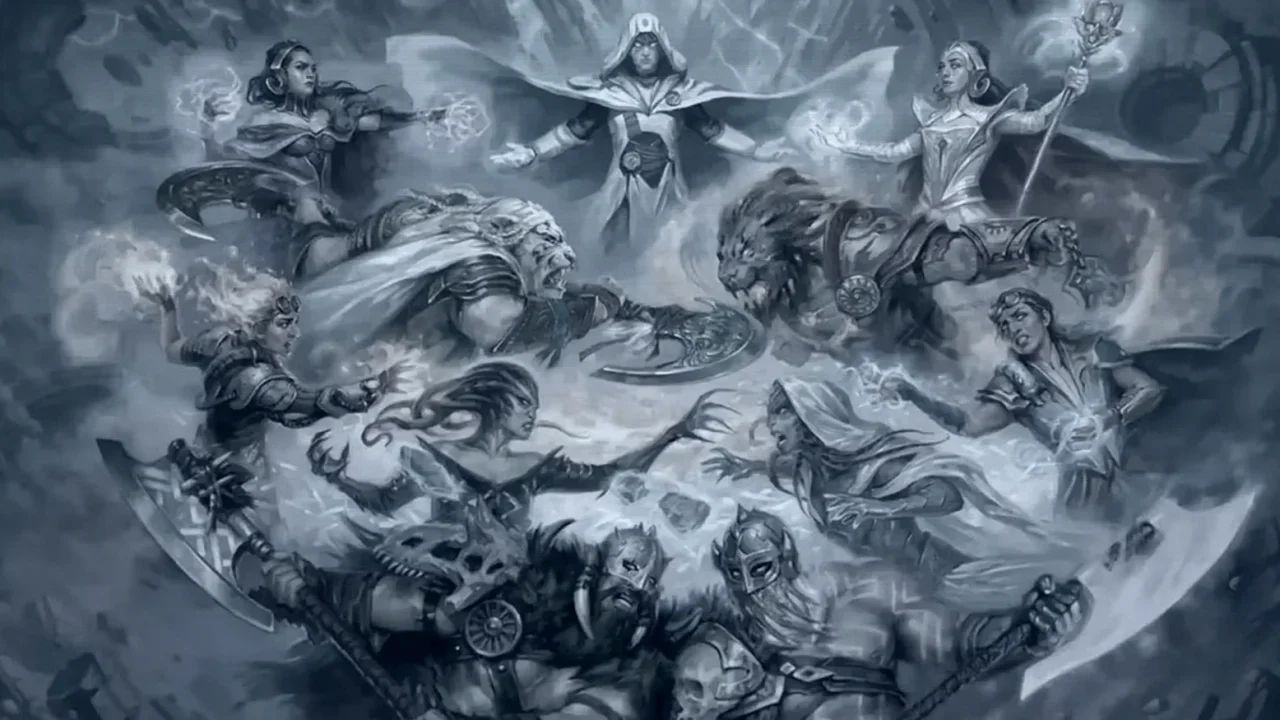
Magic: The Gathering’s Reality Fracture is now officially available, marking the end of the game’s longest-running era. Players who follow the story should expect a major conclusion centered on Jace Beleren, while anyone considering the set for its cards will find several notable returns and character changes. The release is both a new starting point for Standard and a closing chapter for a storyline that began with the original planeswalker lineup in 2007.
What changed with Reality Fracture?
Reality Fracture follows a week of prerelease availability with its full launch, bringing a large-scale story to its conclusion. The set unites the original planeswalkers introduced in Lorwyn, including Jace, Ajani, Liliana, Chandra, and Garruk, while revisiting important characters and events through new color identities. It also adds the original Tarmogoyf as a Mythic card that can now be played in Standard. Another returning card, Displacer Kitten, appears in a modified white version that works with creatures. Those additions make the set relevant to both lore-focused fans and players interested in its broader card pool.
Why Jace’s ending matters to players
Jace Beleren has been one of Magic’s most recognizable figures since his debut in 2007, frequently serving as a central face of the franchise alongside Chandra and, more recently, Loot. In Reality Fracture, a fragment of Jace’s mind becomes The Theorist, the set’s main villain. Vraska ultimately kills that fragment, allowing Jace to regain himself during his final moments after the conflict causes him to harm allies. Jace then passes his Planeswalker Spark to his protégé, Tam. Tam helps resolve the crisis by enabling the Eldrazi Emrakul to consume the Echoverse, preventing it from destroying the current multiverse. Magic characters can return from apparent death, but this storyline presents Jace’s fate as unusually complete, making a straightforward reversal difficult.
What comes next for Magic: The Gathering?
The conclusion does not signal the end of Magic: The Gathering. Jace could still appear in memories, flashbacks, or other retrospective material, even if his main story is finished. Reality Fracture instead functions as a capstone for the era he represented and as a celebration of the wider game, with familiar cards and ideas returning in altered forms. Wizards of the Coast has also revealed three crossovers planned for October 2026, indicating that the franchise is already moving toward new stories and collaborations. Readers who mainly follow Magic for its narrative should treat Reality Fracture as an important transition point rather than a final chapter for the game itself.
What players should know
- Reality Fracture has moved from prerelease availability to its official release.
- Jace Beleren’s story reaches a seemingly definitive ending after nearly 20 years as a central character.
- The set brings the original Tarmogoyf into Standard as a Mythic card.
- Displacer Kitten returns in a new white version with a creature-focused design.
- The broader Magic story continues, with three crossovers announced for October 2026.
Expert View
Reality Fracture appears significant because it combines a major narrative payoff with meaningful callbacks to Magic’s history. Jace’s death gives the set a clear emotional focus, although the franchise’s history of reversals means absolute permanence should be treated cautiously. For story followers, this is an important release to play or watch closely; for everyone else, its long-term value will depend on how its new and returning cards affect Standard.