Ethan Crossfield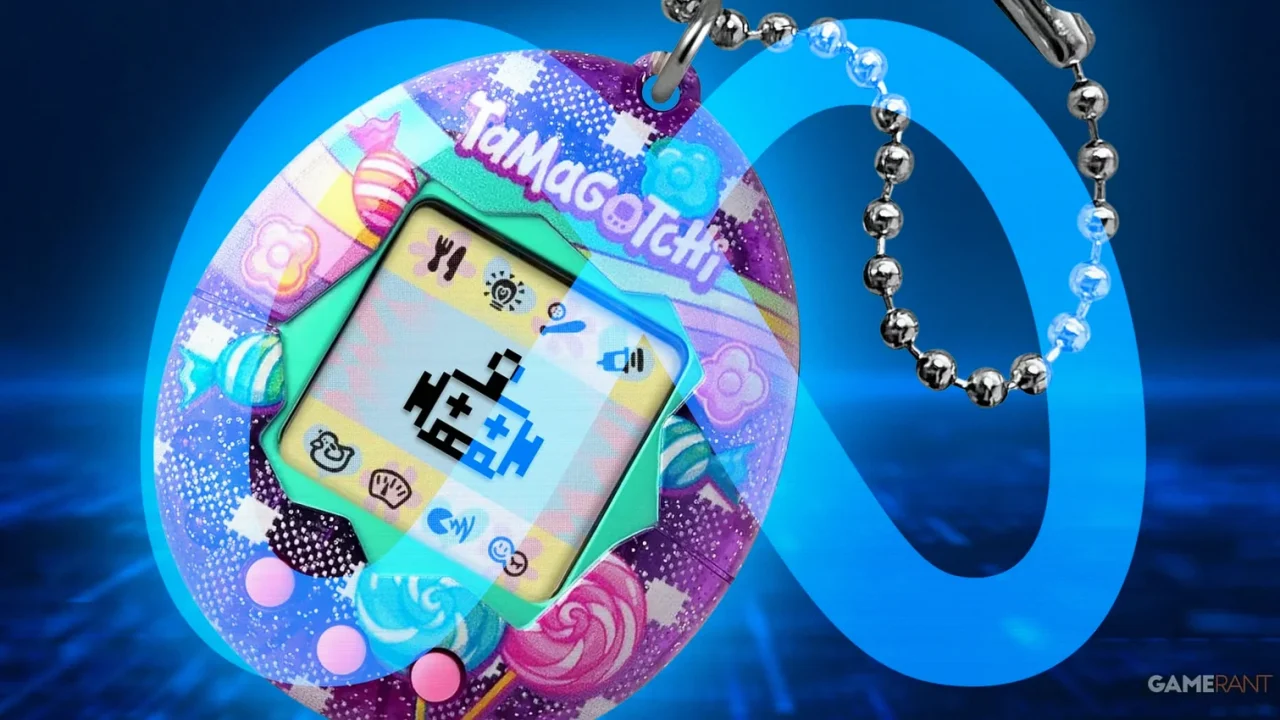
Gaming has long understood the appeal of carrying a small digital companion, from the care-focused Tamagotchi toys of the 1990s to modern handheld devices that keep services within reach. Meta is now applying that familiar format to artificial intelligence with the Muse Charm, a compact accessory designed to provide access to its Muse agent without requiring a phone or smart glasses.
A Familiar Shape With More Ambitious Hardware
Meta introduced the Muse Charm during its Meta Connect event on September 23. Its appearance recalls a classic Tamagotchi, although the device can also be compared to an Apple Watch without a strap. The Charm is intended as a direct gateway to Meta Muse, the company's agentic AI assistant.
Users will activate the handheld through a thumbprint sensor positioned in one corner. The device is also set to include a screen for the Muse Realtime Avatar, along with a camera, microphone, and 5G connectivity. Meta has not announced a price, but Mark Zuckerberg said the company plans to ship the Charm by December.
From Digital Pets to an AI Agent
The Tamagotchi comparison is more than a visual joke. Bandai's battery-powered toys asked owners to care for, play with, and nurture a digital pet through multiple life stages. They launched in the same year as Pokemon and briefly reached a similar level of cultural popularity before that peak faded. The concept has nevertheless continued through updated versions and licensed crossovers, including Kingdom Hearts editions.
Meta Muse belongs to a very different category. Rather than managing a virtual pet, users can ask the agent to perform tasks such as answering emails, publishing social media posts, or shopping. Muse is already available to the public through a Meta account, making the Charm an additional access point rather than a separate AI service. Free use is limited, with users needing to wait for the allowance to refresh or pay for expanded access.
The Device Market Still Has Something to Prove
The Charm enters a market that has already produced a major warning for standalone AI hardware. Humane's AI Pin was designed as a voice-activated assistant that could operate without a phone or computer, but it struggled with overheating and weak battery life while offering no screen. Humane shut down, and the Pin became unusable when its servers were turned off in February 2025. Apple also reportedly put its own AI Pin-style project on hold shortly before Meta's reveal.
That history makes the Charm's execution especially important. A screen, camera, microphone, and 5G could make Meta's device more versatile than earlier attempts, but those components may also affect its cost, battery demands, and everyday convenience. Meta has not yet provided enough information to judge those trade-offs.
Key points
- Meta Muse Charm resembles a Tamagotchi and is planned to ship by December.
- The handheld includes a screen, camera, microphone, 5G, and thumbprint activation.
- Meta Muse can handle tasks including email, social media posts, and shopping.
- Pricing remains unknown as Meta competes in a difficult AI hardware market.
Meta Muse Charm at a glance
| Feature | Confirmed detail |
|---|---|
| Purpose | Access Meta Muse without a phone or Meta smart glasses |
| Hardware | Screen, camera, microphone, 5G connectivity, and thumbprint sensor |
| AI capabilities | Can answer emails, post on social media, and shop |
| Availability | Planned to ship by December; price not announced |
Expert View
The Muse Charm signals that Meta sees AI assistants as services that should follow users beyond phones and glasses. Its early traction gives the company a foundation, with Meta saying Muse passed 500,000 users in a week, but that audience will not automatically translate into hardware sales. The Charm must offer enough speed and convenience to justify another device, while avoiding the reliability problems that damaged earlier AI hardware. Its eventual price and real-world battery performance could matter as much as the novelty of its Tamagotchi-inspired design.