Ethan Crossfield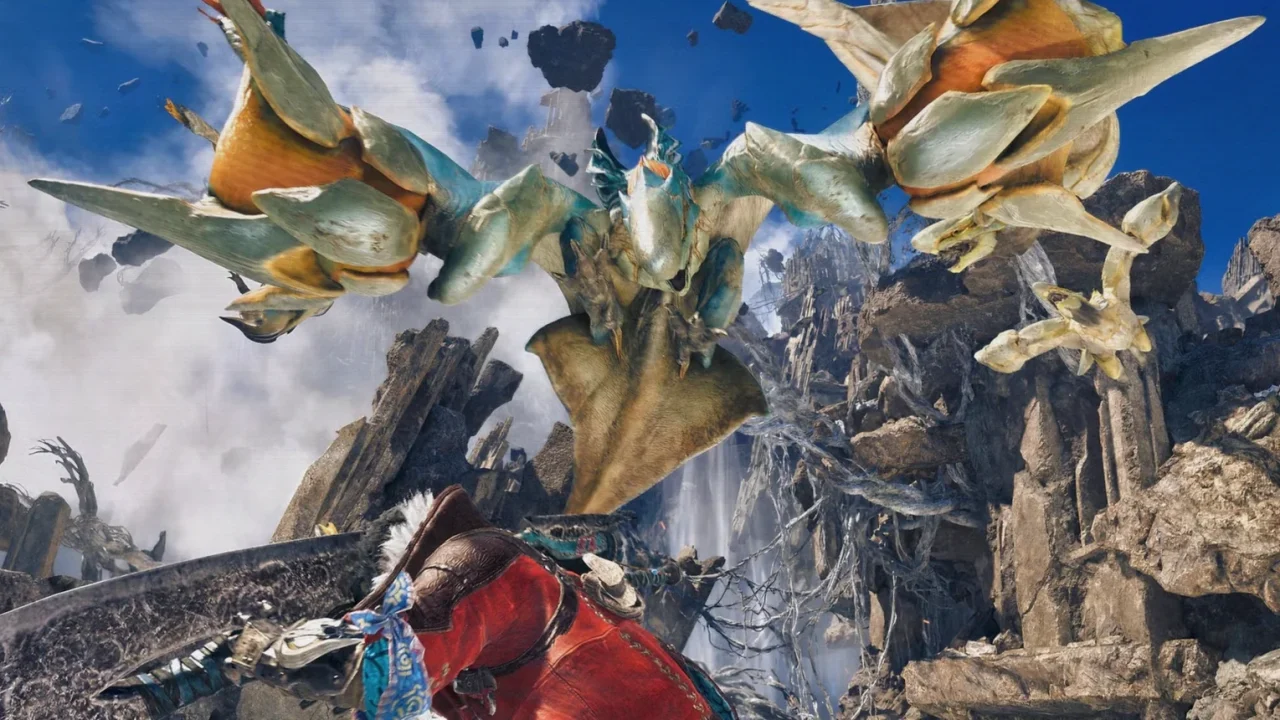
Monster Hunter has built its identity around creatures that feel dangerous, unusual, and believable within a functioning world. That design standard helped shape Monster Hunter Wilds, which introduced 20 new beasts despite the difficulty of expanding an already broad bestiary. However, Capcom has now confirmed that the game once had even more monster concepts in development, including designs that were ultimately considered too far removed from the series’ ecological approach.
Monster Hunter Wilds Had More Creature Ideas Than Its Final Roster
In an interview with Postmode, Monster Hunter Wilds art director and executive director Kaname Fujioka discussed concepts that did not survive development. Some unreleased designs included features such as multiple heads, while others leaned heavily toward horror. Capcom did not add those creatures to the finished game because their appearance and concept did not align with the franchise’s established direction.
The decision is notable because Monster Hunter has never avoided intimidating or grotesque enemies entirely. The series has featured plenty of frightening creatures since its launch in 2005, across more than 20 mainline games and spin-offs. Even so, Wilds appears to have maintained a boundary between an intimidating animal and a creature that feels primarily designed as a horror monster.
Why Capcom Rejected the Scrapped Monsters
Fujioka’s explanation points to a broader rule behind Monster Hunter’s creature design. Developers can explore almost limitless visual ideas, but each monster must make sense as part of a living ecosystem. That means considering how it behaves, what surrounds it, how it fits into the food chain, and whether its physical design supports its role in the game world.
A concept could therefore be rejected even if it was memorable or frightening. A monster that looked striking but could not be placed convincingly within Wilds’ environment would not meet the team’s requirements. This approach helps explain why the series’ creatures often have distinct habitats, behaviors, and combat identities rather than existing only as visual spectacles.
Ascendance Will Expand the Bestiary in 2027
Capcom is preparing Monster Hunter Wilds: Ascendance for a 2027 release window, although the expansion still lacks an exact launch date. Confirmed additions include the flying Araketa and the Elder Dragon Gundoraja. The expansion will also bring back the eyeless Khezu and the Elder Dragons Lao-Shun Lung and Kushala Daora.
Ascendance will add story content set in The Skybound Eyrie, along with new boosted actions. A playable demo was shown to attendees at Tokyo Game Show, offering an early look at the expansion. Players must first complete the base-game seven-star assignment “Awaking From a Dream” before accessing the new content.
Monster Hunter Wilds launched in February 2025 and sold eight million copies during its first three days. Its confirmed Nintendo Switch 2 release on December 4, 2026, will give another audience access to the game before Ascendance arrives.
Key points
- Capcom confirmed that some Wilds monster concepts were cut during development.
- Rejected designs included multiple-headed creatures and concepts considered too horror-focused.
- Monster designs must fit a believable ecosystem and food chain.
- Ascendance is scheduled for 2027, with its exact release date still unconfirmed.
Confirmed Monster Hunter Wilds timeline
| Item | Confirmed detail |
|---|---|
| Base game release | February 2025 |
| First three-day sales | Eight million copies |
| Nintendo Switch 2 release | December 4, 2026 |
| Ascendance expansion | 2027 release window |
Expert View
The cut designs show that Monster Hunter’s roster is guided by more than novelty. Capcom’s ecosystem-first philosophy gives the franchise a recognizable identity and may help explain why its creatures remain memorable across generations. For the community, the reveal also creates a useful contrast: Ascendance can introduce stranger threats, but the strongest additions will likely be those that remain believable within the world rather than simply looking terrifying. With the Switch 2 version arriving before the expansion, interest in how Capcom balances originality and ecological consistency could grow further.