Ethan Crossfield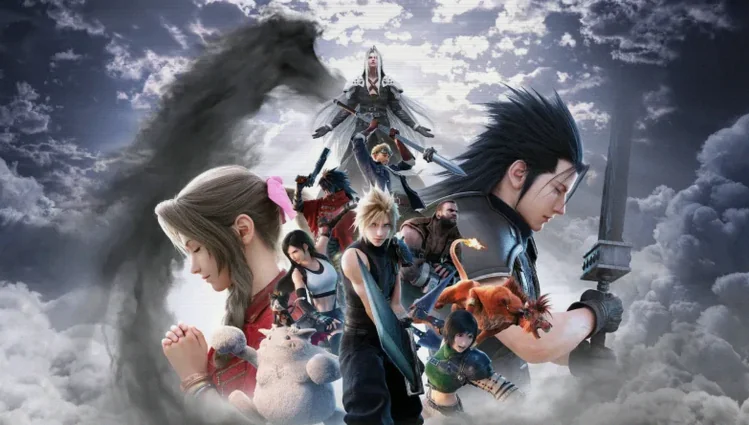
If you’ve been wondering whether Final Fantasy is truly coming back to Nintendo in a meaningful way, Naoki Hamaguchi’s comments make the answer feel more deliberate than symbolic. Here’s what changed with the Final Fantasy VII Remake Trilogy—and what to expect when the third entry lands in 2027.
A long gap—and a remake trilogy that closes it
Final Fantasy’s relationship with Nintendo stretches back to the franchise’s start on Nintendo hardware: it debuted on the Famicom in 1987 and later moved to the NES in 1990. That Nintendo presence lasted through the era that culminated with Final Fantasy VII.
Final Fantasy VII was the turning point. The game marked the series’ shift to 3D and, crucially, moved the franchise’s primary home to PlayStation. After that, the mainline series largely stayed away from Nintendo consoles, with only some side titles and spin-offs appearing there.
That context is why the Final Fantasy VII Remake Trilogy matters to Nintendo fans. The first game in the trilogy arrived on Nintendo Switch 2 earlier this year, followed by the second entry shortly after. Now the director of the remake trilogy is framing the third release as the moment the franchise’s earlier “Nintendo to PlayStation” pivot is being revisited—this time with Nintendo as a core launch destination.
What Hamaguchi says the return means for fans and creators
Naoki Hamaguchi described the decision to bring Final Fantasy VII back to Nintendo through a remake of the very title that originally pulled the series away from Nintendo as a full-circle moment.
He notes that he grew up as both a PlayStation-focused player and someone who also liked Nintendo hardware, making the original FF7’s legacy personally familiar. In his view, the original Final Fantasy VII represents the transition from Nintendo to PlayStation—and bringing that game back with a multiplatform, day-one approach is meaningful.
Hamaguchi also connects the moment to the original creators: he points out that the significance will land with Yoshinori Kitase and Tetsuya Nomura as well, since they grew up with Nintendo platforms. But he emphasizes that he’s the one delivering the return “again on day one” from his role as the remake trilogy director—explicitly positioning it as both fan- and developer-driven.
Day-one multiplatform: a tougher sell in Japan, he says
Hamaguchi also addressed audience expectations, focusing on a cultural difference he observes between Western and Japanese fans. He says Western audiences—particularly in North America and Europe—tend to view multiplatform releases more positively.
In contrast, he describes Japanese fan reactions as more negative toward the approach, with stronger opinions shared online. Still, his takeaway is cautiously optimistic: if the industry continues launching multiplatform on day one, he believes it could become more accepted globally.
For readers tracking what’s next, the director’s comments tie directly to the release plan for the trilogy’s final chapter: Final Fantasy VII Revelation is set to arrive in the first half of 2027, simultaneously across major platforms, including Nintendo Switch 2.
What players should know
- The Final Fantasy VII Remake Trilogy is already on Nintendo Switch 2, with the first two entries released there earlier this year.
- The third and final entry, Final Fantasy VII Revelation, is planned for the first half of 2027 and is intended to launch simultaneously across major platforms, including Switch 2.
- Hamaguchi frames the return to Nintendo as a full-circle response to how the original FF7 shifted the franchise toward PlayStation.
- He expects multiplatform day-one launches to face different fan reactions depending on region, citing stronger negativity among Japanese players.
Expert View
Hamaguchi’s framing is more than marketing—he’s tying Nintendo’s absence from the mainline era directly to the historical pivot caused by Final Fantasy VII. The practical takeaway for Nintendo owners is straightforward: the trilogy’s final chapter is positioned as a true, day-one multiplatform event rather than a delayed port. The bigger question is cultural acceptance, and his comments suggest that how you feel about these simultaneous launches may depend on where you’re playing and how your community talks about multiplatform releases.