Ethan Crossfield
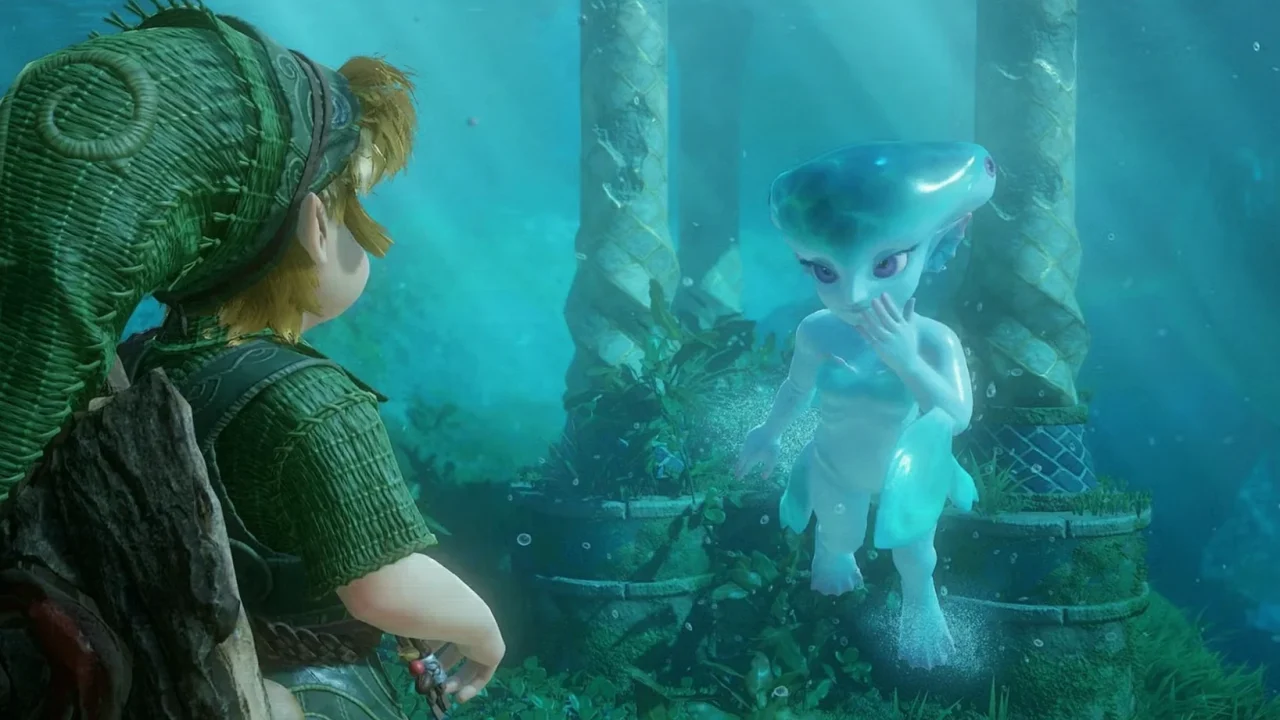
Nintendo has detailed how The Legend of Zelda: Ocarina of Time’s upcoming Switch 2 remake will overhaul the Water Temple, the N64 adventure’s most notorious dungeon. The changes target the friction that made the original area difficult to navigate without abandoning its underwater atmosphere or broader puzzle identity.
What happened: Nintendo confirmed Water Temple changes
In a Nintendo Ask the Developer interview, producer Eiji Aonuma and director HokWai Ng explained that the remake specifically addresses long-standing Water Temple complaints. Aonuma, who originally designed the dungeon, acknowledged that its reputation for difficulty became a clear reason to revisit it. The original concept was built around the novelty of exploring a 3D underwater space, with altered movement, sound, and perspective intended to make the setting feel distinct. However, its complicated layout and frequent equipment management made it easy for players to lose track of both their position and their next objective.
Why it matters: less menu friction, clearer navigation
Nintendo’s solution is not presented as a wholesale redesign. Instead, the remake makes swapping items easier and replaces some visually obstructive walls with lattice-style structures. Those openings let players see into nearby rooms, offering more context for the dungeon’s interconnected layout. That is a meaningful quality-of-life shift for a location where orientation has historically been as challenging as the puzzles themselves. The changes also fit the remake’s wider modernization effort, which includes rebuilt visuals for Switch 2, voiced cutscenes, free jumping, gyro aiming, and additional areas. Nintendo is attempting to preserve Ocarina of Time’s recognizable structure while bringing its controls and readability closer to modern expectations.
What to watch next: whether the dungeon keeps its identity
The key question is whether the Water Temple remains demanding in a satisfying way once the most cumbersome elements are reduced. Nintendo has indicated that bosses have not been extensively reworked, although certain encounters now communicate damage opportunities more clearly. Dark Link, one of the dungeon’s standout moments, has already been shown with a redesign that appears close to the N64 version. The Water Temple arrives relatively late in the adventure, so players will have time to adjust to the remake’s new movement and camera options before reaching it. Fans can judge the changes when Ocarina of Time launches on Nintendo Switch 2 on November 5.
What players should take away
- Expect faster item switching during a dungeon that previously demanded repeated menu use.
- Use the new lattice-style walls to read adjoining rooms and build a clearer mental map.
- Do not expect every challenge to disappear: Nintendo is framing the work as refinement rather than simplification.
- Watch for how free jumping and full camera control affect exploration across the remake, not only in the Water Temple.
Expert View
The Water Temple is the right place for Nintendo to prove this remake understands the difference between challenge and inconvenience. Better visibility and quicker equipment handling should protect the dungeon’s ideas while removing the menu-heavy friction that overshadowed them for many players.