Ethan Crossfield
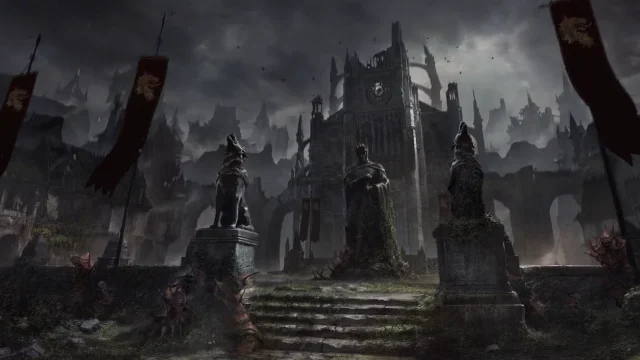
Nintendo has released a fresh official image of Ganon’s Castle from The Legend of Zelda: Ocarina of Time remake, putting the rebuilt final dungeon in focus ahead of the game’s November 5 launch. The reveal matters because it offers one of the clearest looks yet at how Nintendo is updating the defining locations of its first 3D Zelda adventure while retaining their original purpose and atmosphere.
What happened: Nintendo unveiled a rebuilt final dungeon
The new image presents Ganon’s Castle looming over the former grounds of Hyrule Castle. Its broad silhouette remains immediately recognizable, with the central tower rising above the surrounding complex and retaining its role as the setting for the story’s climactic confrontation with Ganondorf. Nintendo’s remake does not appear to be replacing the location wholesale; instead, the exterior preserves major visual ideas from the Nintendo 64 version while giving the fortress a substantially more detailed presentation.
One notable alteration is the perimeter. Where the original used harsher, spiked barriers, the remake uses more ornate fencing around the castle grounds. The image emphasizes the castle’s scale and ominous presence, but it does not reveal any of the dungeon’s redesigned interior areas. Fans will have to wait for further footage to see how its challenges, rooms and progression have been reworked.
Why it matters: the remake is defining its approach
Ganon’s Castle is not simply another familiar Hyrule landmark. It is the final dungeon and one of the game’s strongest visual statements, so its treatment offers a useful indication of Nintendo’s broader remake strategy. The company appears to be aiming for recognizability first, then adding richer environmental detail and modern presentation rather than discarding the architecture players remember.
That approach has also been visible in earlier material featuring Zora’s Domain and Hyrule Castle Town. Nintendo has additionally shown remade bosses, including Dark Link from the Water Temple. Alongside the visual overhaul, the remake adds several quality-of-life features: a Threads of Time synopsis system, voice controls for the Ocarina, and a dedicated Jump button intended to expand movement options. Together, those additions suggest this is positioned as more than a graphical update.
What to watch next before release
The biggest unanswered question is how deeply Nintendo will revise the game’s dungeon design. The castle image establishes the exterior tone, but reveals nothing about its interior encounters or whether the original dungeon structure will receive substantial mechanical changes. Further official footage could also clarify how the new mobility and Ocarina voice-recognition systems work during regular exploration and dungeon puzzles.
Nintendo is building a broader Zelda push around the remake. A special Switch 2 console tied to the series’ 40th anniversary is planned, with Triforce-themed dock artwork and green Joy-Cons. An Ocarina controller is also scheduled for the game’s launch day, designed to work with its voice-recognition mechanics. Young Link and Princess Zelda Amiibo are due in 2027 and will provide special masks in the remake.
Key takeaways for Zelda fans
- Ganon’s Castle keeps its familiar central tower but receives a more elaborate exterior treatment.
- Nintendo has not yet shown the remake’s version of the final dungeon’s interior.
- The game adds a Jump button, a story recap feature and voice-based Ocarina controls.
- The Ocarina of Time remake is scheduled to launch on November 5.
- Nintendo is pairing the release with Zelda-themed Switch 2 hardware and accessories.
Expert View
Showing the final dungeon before launch is a confident move from Nintendo. Ganon’s Castle is a high-stakes test of the remake’s identity: it must feel grander and more modern without losing the unsettling, isolated mood that made the original finale memorable. The exterior image clears that first hurdle, but the interior will determine whether the remake’s new systems genuinely improve a classic or merely sit alongside it.