Ethan Crossfield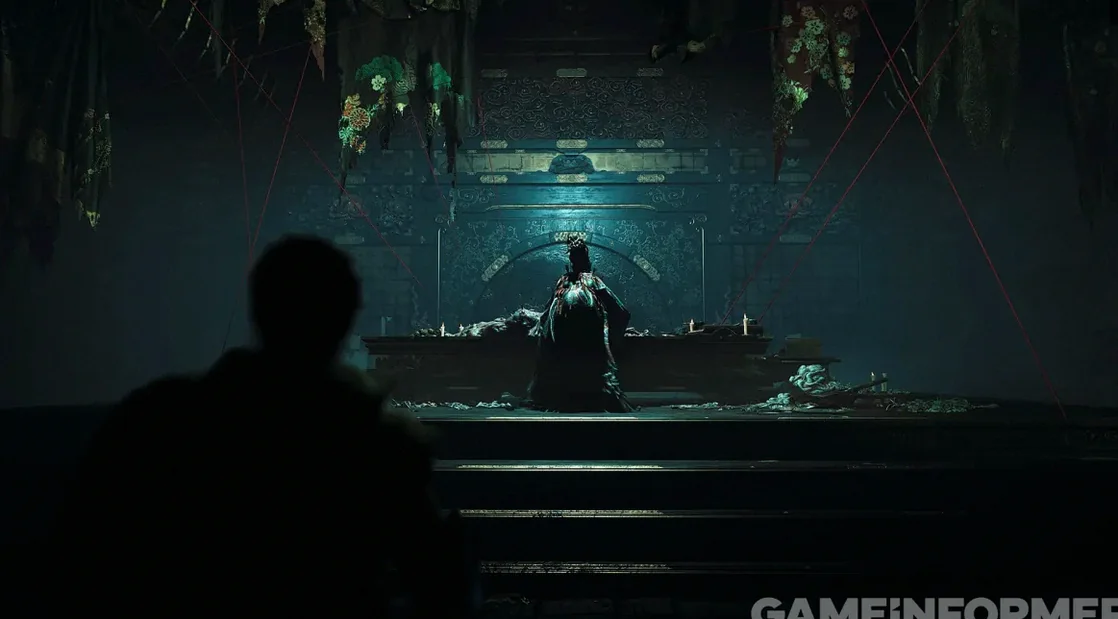
Players deciding whether to follow Capcom’s return to Onimusha should keep an eye on Dokyo’s underground laboratory. This hands-on section combines Japanese horror imagery, a more expressive combat system, and two demanding boss encounters, offering one of the clearest demonstrations yet of what Way of the Sword wants to be. The preview also suggests that the game’s most memorable moments may come from the interaction between its swordplay and its grotesque enemy animations.
What players can expect from Dokyo’s lab
The stage takes place beneath Kyoto’s imperial castle, where Dokyo conducts experiments on humans and animals in an attempt to create stronger Genma. Director Satoru Nihei compared the setting to a classic Japanese ghost house, and the presentation supports that description without turning the game into pure survival horror. Shoji screens cast shadows of mutated bodies and failed experiments, blood reflects the orange glow of torches, and old kimonos hang above the cramped wooden walkways.
Dokyo herself appears to be the stage’s defining presence. She is a more intelligent and developed Genma than the creatures Musashi normally cuts down, and her shrill, theatrical voice follows the player through the facility. Her role and personality make her stand out among the enemies encountered during the preview, although the full impact of her story remains unclear.
Why the combat feels deeper after the tutorial
The laboratory is where the game’s combat stops feeling heavily guided and begins demanding deliberate decisions. The returning Issen remains a high-risk counterattack that requires precise timing, while standard parries charge the Blazing Gauge and set Musashi’s sword alight for increased damage. A Reflex Dodge fills another gauge and creates an opening for a powerful attack from an enemy’s side or back.
Players can also deflect weapons, trigger Break Issen finishers after exhausting an enemy’s stamina, chain Issen attacks across groups, reverse grabs, and use Oni Armaments with different functions. The Earth-Shaker hammers are particularly useful for damaging stamina. Blade Barrages add another reaction test: when Musashi and an enemy use matching attacks, the player must choose a different sword strike to break the deadlock.
The feedback is unusually specific. Blade sparks and sound effects change according to the timing of a parry, giving players both a mechanical signal and a visual indication of how early or late they were. Against larger enemies, a Break Issen can target different body areas for different rewards, including extra damage or more health-restoring souls.
Who should watch the boss fights and what comes next
The preview’s two major fights test whether players can adapt rather than simply attack faster. Byakue, also called Hundred Defilements, grows more dangerous as the battle progresses and encourages a patient approach built around reading wide swings, lunges, and spinning blades. Defeating it grants the Earth-Shaker hammers.
The stage ends with Nue, a pair of red and blue chimera-like creatures with electric tails. Aggressive slashing leads quickly to defeat, so parries, Reflex Dodges, and Issens become essential. The encounter may remind some players of boss design in Soulslike games, but the development team has stated that Onimusha: Way of the Sword is not a Soulslike, and this preview supports a more focused action-game identity.
Capcom is also using its RE Engine for a Dynamic Dismemberment System. When stamina is depleted and a finishing move lands, Genma can be visibly split apart before completing an exaggerated death animation. Motion capture from samurai specialists and choreographers is intended to give Musashi and the bosses a grounded physicality beneath their supernatural spectacle. Further coverage, gameplay, and behind-the-scenes material are planned around the game’s launch window.
What players should know
- Dokyo’s facility is a dark-fantasy action stage inspired by classic Japanese ghost-house imagery.
- The combat includes Issen counters, parries, Reflex Dodges, stamina breaks, deflections, chain attacks, and Oni Armaments.
- Byakue rewards patience and adaptation, while the Nue fight places even greater emphasis on defensive timing.
- The Dynamic Dismemberment System combines enemy separation with extended samurai-style death animations.
- Dokyo is presented as one of the preview’s strongest characters, but her wider role is still being kept under wraps.
Expert View
This section makes Way of the Sword look more ambitious than a simple revival of an older action formula. Its combat has enough layered timing and resource management to reward mastery, while the laboratory provides a memorable setting and a strong showcase for Capcom’s animation technology. The main caveat is that this is a focused preview rather than a full assessment: the depth of the wider game, its pacing, and the balance of its encounters still need to be judged beyond Dokyo’s lair.