Ethan Crossfield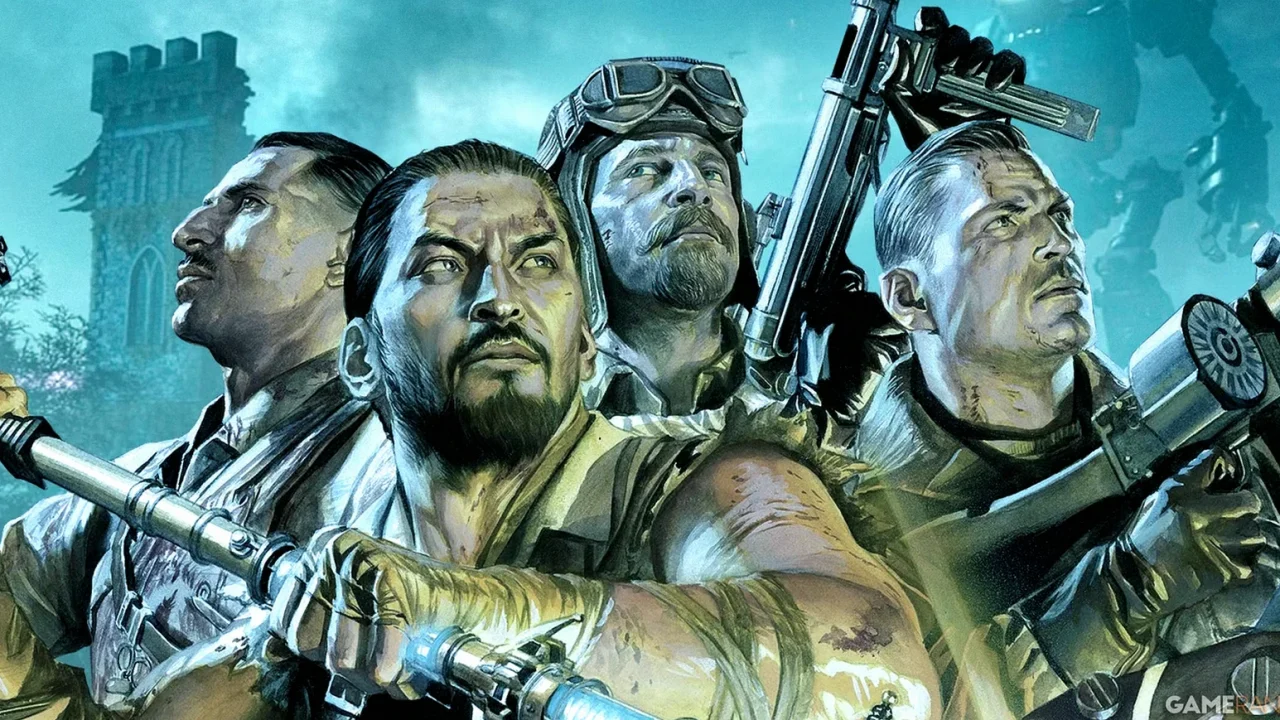
Origins is widely regarded as one of Call of Duty Zombies’ finest maps, but Treyarch has revealed that its ambitious World War I setting was originally planned on a much larger scale. Details in the newly released Call of Duty Zombies: The Art of Treyarch book show that several major locations were removed because the technology available at the time could not support the full concept.
What happened to Origins’ cut content
Creative Director Corky Lehmkuhl revealed that the first version of Origins included three substantial additions. A large French town was planned for the space between the central mound and the church. Beneath the mound, Treyarch designed four sizeable underground chambers connected by flooded tunnels. Reaching those areas would have required players to use a Panzer Soldat suit.
The team also intended to make the zeppelin above the battlefield fully accessible. Rather than serving only as a striking part of the map’s skyline, the airship could have become another playable destination. The exact gameplay functions for these areas were not finalized in the available details, but their removal significantly reduced the scope of the original design.
Why the unused ideas matter
Origins already pushed the mode in several directions at once. Its giant robots, elemental staves, side quests, and introduction of Primis gave the map a strong identity beyond standard survival. The cut locations suggest that Treyarch was trying to make the battlefield feel like a larger interconnected world, not simply a series of trenches and buildings.
The underwater tunnel concept is especially notable because it was tied to a specific piece of equipment rather than being a simple extra route. Players would have needed to acquire a Panzer suit to cross the flooded sections, creating the possibility of a dedicated progression step. Whether the suit would have allowed players to use the Panzer Soldat’s weapons is unknown, so that part should not be treated as confirmed.
The zeppelin plan also fits the map’s existing vertical design. Launch pads already send players toward the giant robots, and an additional route into the airship could have extended that idea. The French town, meanwhile, might have provided more open, non-trench space and another setting for quests or exploration.
What to watch next for Zombies fans
The revelation does not diminish the finished Origins map. In fact, it highlights how much Treyarch achieved after scaling the concept back to fit the hardware and development constraints of the era. Larger maps are not automatically better, particularly in a mode where navigation, pacing, and enemy pressure must remain readable.
It does, however, offer a useful lens for looking at Treyarch’s later Zombies work. TranZit is another example of an ambitious concept limited by contemporary technology, while Black Ops 7’s Ashes of the Damned is described as an opportunity to revisit that broader open-world direction with fewer technical restrictions. With the Art of Treyarch book adding context to the mode’s development and Rex Infernus approaching, cut content remains a compelling way to understand where Zombies could go next.
Key takeaways from the Origins reveal
- The original map included plans for a French village between the central mound and church.
- Four underground chambers would have been reached through flooded tunnels.
- A Panzer Soldat suit was intended to help players cross those underwater sections.
- Treyarch considered making the zeppelin above the battlefield fully explorable.
- The content was cut after the team determined that the technology of the time could not support the full design.
Expert View
The most important takeaway is not that Origins was secretly incomplete; it is that the map’s final form was the result of disciplined prioritization. Treyarch kept the elements that made the experience distinctive and coherent instead of forcing every ambitious idea into a technically strained package. The unused village, tunnels, and zeppelin are exciting to imagine, but their value today lies in showing how much design ambition was already behind one of Zombies’ most celebrated maps.