Ethan Crossfield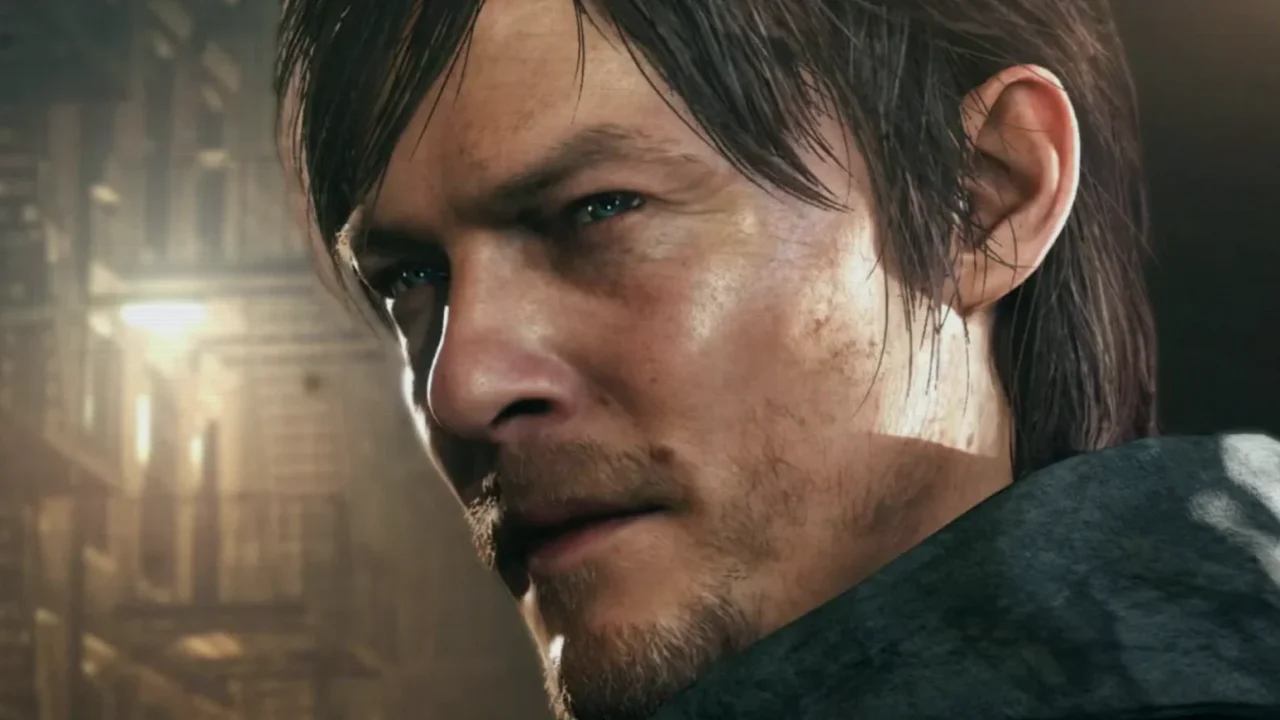
Few game demos have had an impact as lasting as P.T., the short horror experience that became a defining PlayStation 4 mystery before disappearing from the digital storefront. More than a decade later, a fan developer is attempting to bring that specific version back to modern hardware through a native PC port, potentially giving one of horror gaming’s most famous lost experiences a new future.
The Demo That Became a Gaming Legend
P.T. arrived without warning on PS4 in August 2014 under the fictional 7780s Studio name. Players initially encountered what appeared to be a standalone psychological horror game, built around repeated trips through an L-shaped hallway and a series of increasingly obscure puzzles. Solving those puzzles revealed the project’s true identity: P.T. was a playable teaser for Silent Hills.
The planned game brought together Hideo Kojima, filmmaker Guillermo del Toro, and actor Norman Reedus. However, Konami canceled Silent Hills in 2015 as its relationship with Kojima deteriorated. P.T. was then removed from the PlayStation Store, and access eventually disappeared even for people who had previously claimed the demo. That left the game tied to a specific moment in PS4 history and made legitimate access increasingly difficult.
A PC Port Built From the Original Game’s Data
Fan developer LoreanXavier is now rebuilding P.T. as a native PC experience. The project is being developed by reverse-engineering the PS4 executable and recreating its logic and rendering in C++ and Vulkan. It is designed to run using data files from an original copy of the game, rather than functioning as an emulator, a wrapper, or a remake made in another engine.
Much of the experience is reportedly functional already. The work includes Lua scripts, cutscenes, Lisa’s animations, sound behavior, controller vibration, and the game’s voice-recognition sequence. A roughly 30-minute build has been shown on YouTube, but no public release date has been announced.
The port also targets features that were not part of the original PS4 presentation, including support for frame rates above 60 FPS, higher resolutions, mouse and keyboard controls, modern controllers, and optional AMD FSR 3.1.
Why P.T.’s Influence Still Matters
P.T. created fear without relying on conventional combat, extensive menus, or a constant stream of enemies. Its hallway remained largely familiar while small changes undermined the player’s confidence: doors shifted, objects appeared, the radio addressed the player, and Lisa could seemingly move between moments. The design made observation and uncertainty central to the horror.
That approach influenced projects such as Allison Road, Visage, and Layers of Fear, all of which explored first-person perspective, domestic spaces, altered environments, and psychological tension. Earlier fan recreations approximated P.T. in other engines, but LoreanXavier’s project is presented as an effort to preserve the original code and gameplay behavior more closely.
A Second Life Without a Silent Hills Return
The PC project cannot restore Silent Hills or change the circumstances that ended P.T.’s official availability. It can, however, keep the original demo accessible in a form suited to current PC hardware. That distinction is important: the appeal is not simply revisiting a famous horror concept, but examining the precise systems and atmosphere that made the 2014 release so influential.
Konami has since revived the Silent Hill franchise, while Kojima has moved on to projects including Death Stranding, OD, and Physint. P.T. remains frozen in its original era, yet continued community work around it shows that its impact has not faded. The port’s eventual availability will depend on the developer’s progress, but its existence alone demonstrates how strongly that single hallway still resonates.
Key points
- LoreanXavier is rebuilding P.T. as a native PC port using C++ and Vulkan.
- The project uses data from an original copy and aims to preserve the PS4 game’s behavior.
- Features include higher resolutions, high frame rates, modern controls, and optional AMD FSR 3.1.
- There is currently no announced release date for the PC build.
Expert View
The project highlights a broader reality of game preservation: when a digital title vanishes from official storefronts, dedicated communities may become the only force keeping its design and history visible. For horror developers, P.T. remains a useful case study in how repetition, environmental detail, and uncertainty can produce lasting fear without conventional action systems. Its return as a carefully reconstructed PC experience would not replace an official release, but it could make an important piece of modern horror history easier to study and experience.