Ethan Crossfield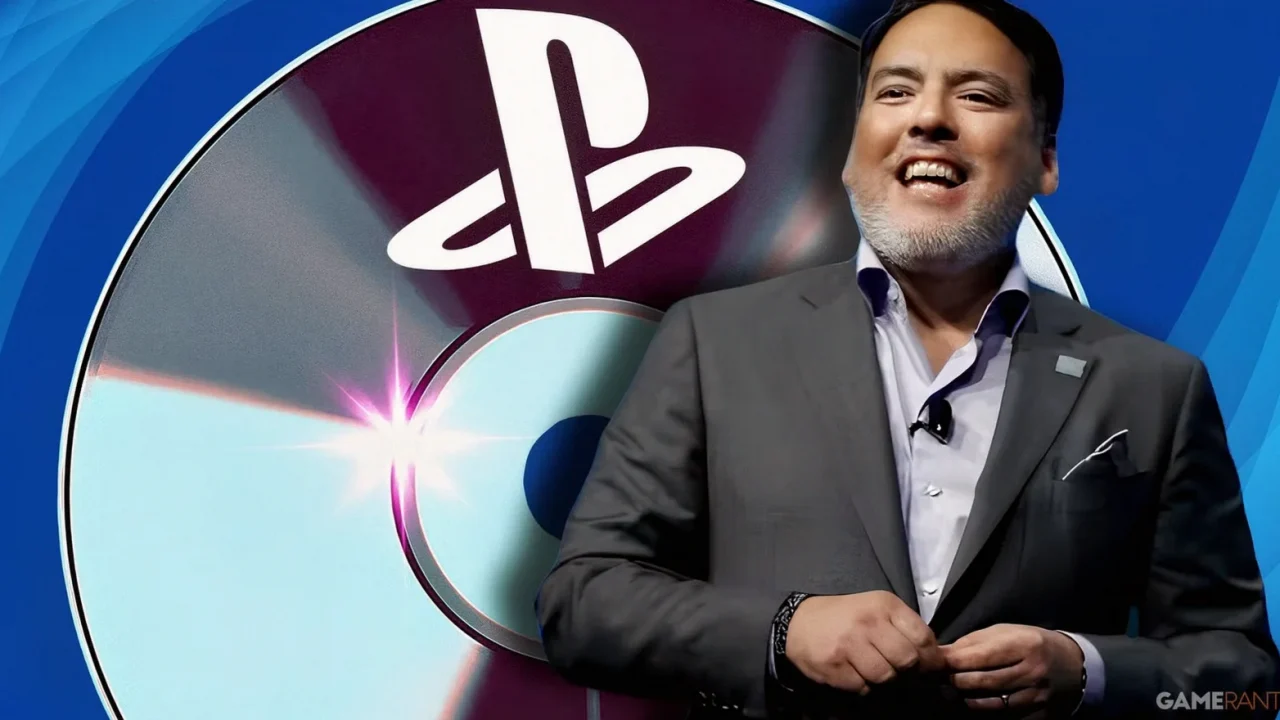
Former PlayStation executive Shawn Layden has challenged Sony’s move toward a discless future, arguing that the decline of physical games is not inevitable. In comments to the Game newsletter, Layden described the situation as “depressing, but solvable” and suggested that Sony could preserve disc releases by changing how it manufactures them. His proposal puts the focus on production strategy rather than demand, while raising larger questions about ownership, resale, and the value of PlayStation’s physical-media ecosystem.
What Happened
Layden previously offered a more neutral explanation for Sony’s decision. After the company’s announcement in July, he said that choices to discontinue products or features often come down to spreadsheet calculations, implying that the economics of maintaining a small market may no longer work. His latest remarks are more critical. Rather than accepting the end of physical PlayStation games as a fixed outcome, he pointed to a possible alternative: Sony could use trusted third-party manufacturers.
Sony is known for keeping much of the production process for physical PlayStation releases under its own control. Layden contrasted that approach with Xbox, which works with certified partners. In his view, outsourcing more of the manufacturing process could reduce costs and allow Sony to continue offering discs beyond 2028 without relying entirely on proprietary production systems.
Why It Matters
The argument is about more than whether players can buy a boxed copy of a game. Layden has also questioned what ownership means in an all-digital market, especially when buyers cannot resell the games they purchase. That concern gives the disc debate a consumer-rights dimension: physical products can be traded, collected, and retained independently of a platform’s storefront policies.
Layden also warned against treating every business decision as a purely statistical exercise. A move that improves a company’s calculations could still weaken its brand if customers feel that an important part of the platform is being removed. That tension is especially significant for PlayStation, where collectors and physical-media supporters continue to view discs as part of the console’s identity.
Sony’s current position gives little indication that it plans to follow Layden’s recommendation. Chief Financial Officer Lin Tao has said physical media is not the main factor driving PlayStation console sales. Instead, Sony has identified curated content, a stable gaming environment, and greater affordability than high-end gaming PCs as key areas for future growth.
What to Watch Next
The immediate question is whether Sony will reconsider its manufacturing model, not whether it has acknowledged the criticism. Based on its recent statements, outsourcing disc production does not appear to be part of the company’s stated plan. That leaves physical-game supporters waiting to see whether Sony develops another way to provide boxed releases or proceeds with its existing direction.
The backlash has remained visible. During the most recent PlayStation State of Play, protesters repeatedly posted “No Disco, No Buy,” a slogan opposing the move away from discs. The campaign is unlikely to change Sony’s strategy on its own, but it shows that the issue has become a meaningful point of friction between the platform holder and part of its audience. The response to future hardware and software announcements may reveal how much that dissatisfaction affects PlayStation’s public image.
Key takeaways for PlayStation players
- Layden believes third-party manufacturing could keep physical PlayStation discs viable beyond 2028.
- Sony currently emphasizes content, platform stability, and affordability over physical media.
- Digital purchases raise unresolved concerns about resale and long-term ownership.
- The “No Disco, No Buy” campaign shows that opposition remains active among fans.
- A change in manufacturing strategy would be required before Sony could adopt Layden’s proposal.
Expert View
Layden’s suggestion is compelling because it identifies a practical compromise instead of treating discs and digital distribution as mutually exclusive. Sony may be right that physical media is no longer the primary engine of console sales, but that does not make the format irrelevant to players who value resale, collecting, or access outside a storefront. Outsourcing production could preserve that option at a lower cost, yet Sony’s recent messaging suggests that brand strategy—not a lack of possible solutions—will determine whether PlayStation keeps physical games alive.