Ethan Crossfield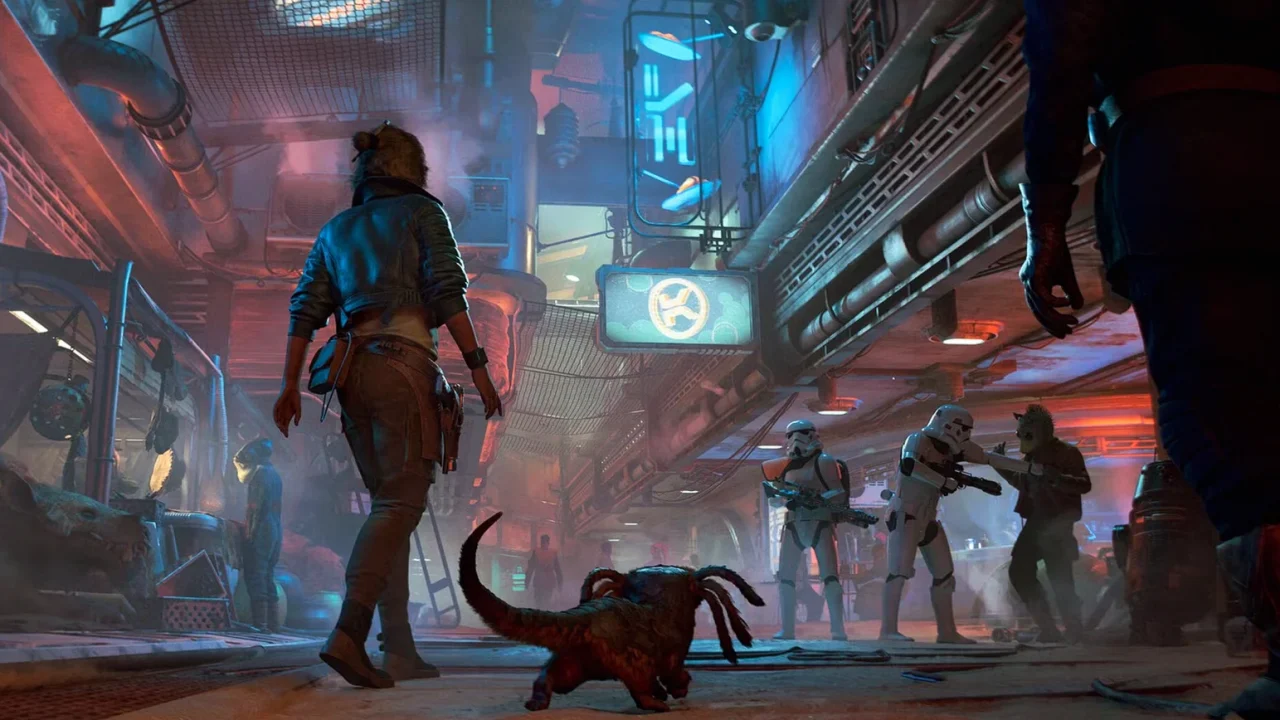
With the Star Wars games slate expanding across multiple studios, the franchise’s latest setback is a reminder of how quickly post-launch plans can change. A Star Wars insider claims Massive Entertainment originally mapped out six DLCs for Star Wars Outlaws—yet weak sales ultimately reduced the game’s follow-up content, which has now concluded.
Planned for Six DLCs, Delivered Only Two
Star Wars Outlaws was built as a narrative-driven open-world adventure starring scoundrel Kay Vess, set between The Empire Strikes Back and Return of the Jedi. Despite receiving decent critical reception—reflected by a Top Critic Average of 75 on OpenCritic—sales reportedly did not meet expectations.
According to an insider posting under the name FivesWalker on X, Ubisoft and Massive Entertainment initially planned a total of six DLC releases for Outlaws. One of those planned expansions was described as a tie-in with the novel Star Wars Outlaws: Low Red Moon, which had already been released earlier this year.
However, the insider’s account links the shift in strategy to struggling sales. As a result, the originally planned post-launch roadmap was scaled back, and Outlaws ultimately received only a fraction of the intended DLC support before Massive Entertainment concluded the program.
Of the alleged six DLCs, only two were released: Wild Card and A Pirate's Fortune. Those expansions were still meaningful for fans, bringing back Star Wars characters Lando Calrissian and Hondo Ohnaka. Even with those additions, the game did not become a financial success, helping explain why Ubisoft would stop further DLC—even if it leaves players wanting more.
Sequel Talk Surfaces, but Development Status Remains Unclear
Beyond DLC, the insider also claims that a Star Wars Outlaws sequel was planned. The idea aligns with earlier reporting that Ubisoft had canceled a sequel after the original’s performance fell short. Still, the source does not clarify how far along any sequel work progressed, leaving the extent of development uncertain.
In practical terms, this matters because it frames Outlaws not just as a one-and-done release, but as a project whose broader roadmap—expansions and follow-up—was constrained by commercial results.
What’s Next for Star Wars Players
While Outlaws’ DLC era appears to be over, the franchise’s broader gaming future looks busy. Multiple Star Wars projects are expected to arrive in the near term, including an XCOM-like strategy title, Star Wars: Zero Company, and a podracing-focused game, Galactic Racer.
Other entries are also on the horizon: Fate of the Old Republic and the long-awaited KOTOR remake are set to bring players back to the Old Republic era. On the action side, Respawn’s Star Wars Jedi 3 is expected to continue the studio’s ongoing trilogy of acclaimed titles. Meanwhile, Quantic Dream’s Star Wars Eclipse is still in development, even though it has been less visible recently.
Taken together, the Outlaws DLC cutback highlights a common industry tension: even when a game earns solid reviews, sales can determine whether the franchise expands through long-term content.
Key points
- Insider claims Ubisoft and Massive originally planned six Outlaws DLCs.
- Only two DLCs launched: Wild Card and A Pirate's Fortune.
- Weak sales reportedly drove the reduction and eventual end of post-launch support.
- A sequel was reportedly planned but canceled; its development stage is unclear.
| Planned/Released DLC | Status | Noted content |
|---|---|---|
| Wild Card | Released | Brought back Lando Calrissian |
| A Pirate's Fortune | Released | Brought back Hondo Ohnaka |
| Other four DLCs | Not released | Planned but cut due to sales |
Expert View
For the Star Wars ecosystem, the Outlaws DLC story is a clear signal that critical reception alone doesn’t guarantee long-term content investment. In a market where franchises compete for attention across strategy, action, and RPG sub-genres, Ubisoft’s decision to scale back suggests that commercial thresholds are tightening—especially for open-world launches. For players and creators, it also means expectations should be set around what’s already scheduled publicly, because post-launch roadmaps can change quickly when sales underperform.