Ethan Crossfield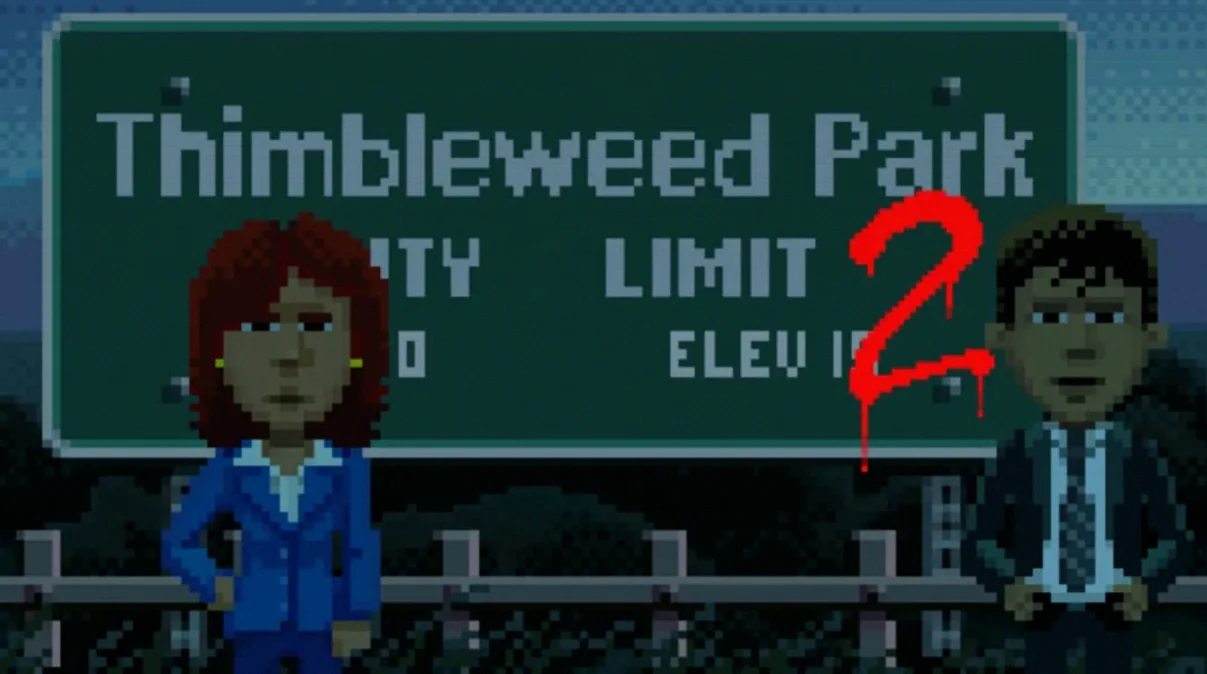
Terrible Toybox has announced Thimbleweed Park 2—an overdue follow-up to the LucasArts-era point-and-click revival that captivated players in 2017. With Agents Ray and Reyes returning for another strange “whodunit” at the Edmund Mansion, the sequel matters now not just because it’s real, but because it doubles down on the series’ off-kilter investigation format.
What happened: a follow-up to the 2017 throwback
Thimbleweed Park debuted in 2017 as a spiritual successor to LucasArts-style adventure games. It was developed by the team at Terrible Toybox and built around the sensibilities of Manic Mansion co-creators Gary Winnick and Ron Gilbert (who also created the Monkey Island series). After a successful Kickstarter and a strong launch on March 30, 2017, the project has now earned its sequel nine years later.
Thimbleweed Park 2 is once again centered on Agents Ray and Reyes, who are tasked with solving a murder mystery at the Edmund Mansion. The premise leans into classic whodunit structure: each of the mansion’s quirky occupants becomes a suspect, and the player’s job is to investigate individuals to narrow down who the culprit is.
Returning characters from the first game are set to appear as well, including Delores and Franklin Edmund, alongside Ransome the Clown. Terrible Toybox has not released a trailer so far, leaving the game’s presentation and exact tone to be inferred from the series’ established identity.
Why it matters: it’s positioned as “more Thimbleweed Park”
While many sequels are framed as direct continuations, Thimbleweed Park 2 is being described as something different. The game’s Steam page characterizes it as neither a straightforward sequel nor a prequel, instead presenting it as an additional chapter in the same weird, investigation-driven universe.
That framing is important for fans of the original because it signals continuity in gameplay expectations rather than a strict narrative timeline. The Steam description also reinforces the series’ signature mood: in a town like Thimbleweed Park, a dead body is just the beginning of the problems—suggesting the investigation will be tangled up with the broader absurdities players came for in 2017.
What to watch next: trailer, details, and how the mystery is structured
With no trailer released yet, the most immediate thing for players to look for is a first look at how Thimbleweed Park 2 handles its mystery setup—especially how it distributes suspects, investigations, and clue-finding across the mansion’s cast.
The other key watch item is how closely the sequel hews to what made the original land. The first Thimbleweed Park received positive attention at launch, including a review from former Game Informer editor Elise Favis, who awarded it an 8.5 out of 10 and highlighted its humor and improved puzzle design, even while noting the narrative’s twists didn’t always fully click. As the sequel approaches its 2028 arrival, fans will likely be watching whether Terrible Toybox can match that balance of whimsical characters, puzzle quality, and mystery pacing.
Practical takeaways
- Fans of classic point-and-click investigations have a new target to follow: Thimbleweed Park 2 is officially in development for 2028.
- Expect the sequel to keep the whodunit structure, with multiple suspects in a single location and investigation as the core loop.
- Returning characters like Delores and Franklin Edmund (plus Ransome the Clown) suggest familiar series dynamics rather than a wholly new cast.
- Because there’s no trailer yet, watch for early gameplay or clue/investigation footage to confirm how the mystery system evolves.
Expert View
Thimbleweed Park 2 feels like a smart kind of sequel: it isn’t promising to “fix” the past or force a conventional timeline, and it’s clearly leaning into what made the first game stick—character-driven absurdity paired with investigation and puzzles. For players, the lack of a trailer is a waiting-room risk, but the Steam framing (“more Thimbleweed Park” rather than a strict sequel or prequel) lowers expectations for narrative continuity and raises confidence that the core experience will remain unmistakably weird.