Ethan Crossfield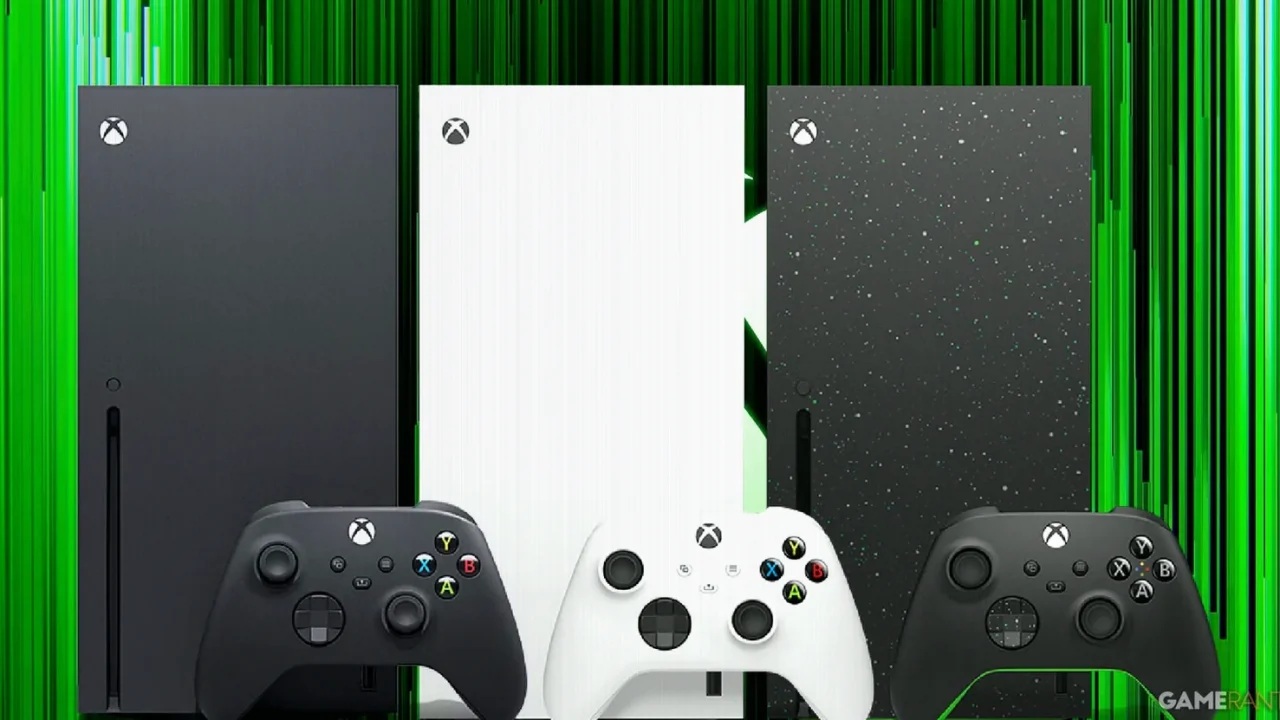
The next console generation is increasingly being shaped around flexibility, with players expecting hardware to serve both traditional living-room gaming and PC-style ecosystems. At Gamescom 2026, Xbox CEO Asha Sharma offered the clearest update yet on Microsoft's next-generation platform, confirming that Project Helix is being developed as a family of devices rather than necessarily a single console.
Project Helix Will Extend Beyond One Xbox Device
Speaking with BBC News, Sharma said Microsoft was not ready to provide more specific information about Helix, but confirmed that work is underway on a broader group of hardware built around the project. That wording leaves the exact lineup unknown, including whether it will contain multiple console models, portable hardware, or other Xbox-branded products.
The clarification came in response to a question about whether Project Helix would be a disc-less system. Sharma did not confirm or deny that detail. As a result, physical media remains an open question, while the larger message is that Microsoft's next hardware generation is focused on player choice.
A Hybrid Xbox and PC Platform
Microsoft first announced Project Helix in March 2026 as a hybrid of Xbox and PC. That positioning could allow the company to connect console gaming with the expanding range of Windows-based devices, although Microsoft has not explained how the different products will work together.
One possibility is a lineup that includes a standard home console alongside portable PC gaming hardware. Xbox handheld products such as the ROG Xbox Ally and ROG Xbox Ally X could point toward that broader direction, but the source does not confirm that either device belongs to the Helix family. Another interpretation is a simpler split between higher- and lower-cost consoles, similar to the relationship between Xbox Series X and Xbox Series S.
Reported Hardware Ambitions Remain Unconfirmed
Early reports describe Project Helix technology built around a custom AMD system-on-chip and next-generation DirectX features. The reported capabilities include improved ray tracing, GPU-direct work graph execution, neural rendering, machine-learning upscaling, multi-frame generation, ray regeneration for ray tracing and path tracing, neural texture compression, DirectStorage, and zstd support.
It is not clear whether those specifications apply to every Helix product or only a flagship model. Sharma's emphasis on affordability is also significant, particularly as rising memory costs have increased pressure on gaming hardware prices. Estimates have placed a possible Helix price near $1,000, but that figure is not official and may not represent the entire device family.
What Comes Next for Xbox
Reports currently point to a Holiday 2027 target for next-generation Xbox hardware, though Microsoft has not confirmed a firm launch date. For now, the company is withholding the details that would define the lineup: product types, performance tiers, pricing, disc support, and the relationship between Xbox and PC software.
The next major reveal will need to explain whether “family of devices” represents a genuine multi-device strategy or simply several versions of one console. Until then, Project Helix is best understood as an ecosystem plan rather than a finalized product announcement.
Key points
- Xbox CEO Asha Sharma described Project Helix as a family of devices.
- Microsoft has not confirmed whether the next-generation hardware will be disc-less.
- Project Helix was announced as a hybrid Xbox and PC platform in March 2026.
- Holiday 2027 is a reported target, while pricing and the final lineup remain unconfirmed.
Confirmed and reported Project Helix details
| Item | Current status |
|---|---|
| Device strategy | Confirmed as a family of devices |
| Platform direction | Announced as a hybrid of Xbox and PC |
| Launch timing | Reportedly targeting Holiday 2027 |
| Price | Around $1,000 in estimates; not official |
| Disc support | Not confirmed |
Expert View
The announcement signals that Xbox may be moving further away from a single-box hardware cycle and toward a connected device ecosystem. That could give players more entry points and make Xbox and PC gaming feel more unified, but it also creates a communication challenge. Microsoft will need to clearly separate performance tiers, explain software compatibility, and show how affordability fits alongside reports of premium hardware costs. For competitive gaming, the most important questions will be consistency across devices and whether developers can support different hardware levels without fragmenting the player base.