Ethan Crossfield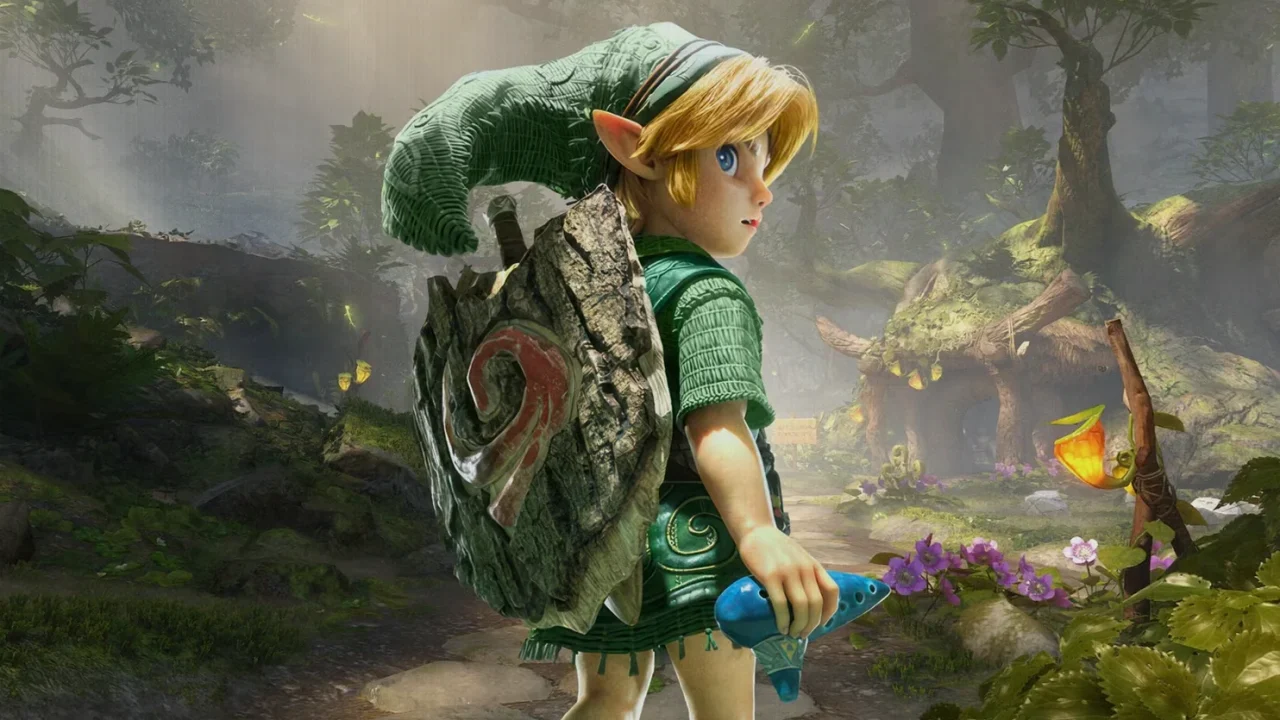
Nintendo’s latest presentation suggests that The Legend of Zelda: Ocarina of Time remake is designed as a faithful modernization rather than a dramatic reimagining. Switch 2 players can expect upgraded visuals, movement and equipment changes, a redesigned Castle Town, and a November 5 release. However, Nintendo has also confirmed that some old-school design choices—including loading screens between certain areas—are staying in place.
What changed in the Ocarina of Time remake?
The remake is being built from the ground up for Nintendo Switch 2 while retaining the broad layout of the Nintendo 64 original. Its most visible upgrade is the presentation, with significantly improved visuals across the adventure.
Nintendo is also making several changes to how Link moves and how players manage his tools. Link can run and jump freely, while equipment can be cycled through more quickly. That adjustment should make sections that previously required frequent menu navigation, including the Water Temple, feel less cumbersome. Castle Town has received a complete redesign as well, giving one of the original game’s central locations a substantially different appearance.
Those changes sit alongside a broader commitment to the original structure. Based on the presentation, this appears closer to a 1:1 remake than to a project that radically rebuilds Hyrule or rewrites the campaign.
Who should follow this release?
Fans who want Ocarina of Time with modern controls, improved graphics, and fewer equipment-management interruptions have clear reasons to keep watching. The movement updates and faster item selection address some of the friction associated with the Nintendo 64 version without suggesting that Nintendo is abandoning its classic progression or layout.
Players hoping for a remake on the scale of Capcom’s more transformative Resident Evil projects may need to temper expectations. Character designs have already produced mixed reactions, and the announced changes may not satisfy fans looking for a substantially different interpretation of the adventure.
The pricing also provides context. The remake will cost $59.99 digitally and $69.99 physically, placing it below the $70 digital and $80 physical pricing cited for Mario Kart World and Fire Emblem: Fortune’s Weave. That lower price may reinforce the impression that Nintendo sees this as a focused remake rather than one of its largest Switch 2 productions.
What happens next for Switch 2 players?
Nintendo has deliberately retained loading screens when Link moves between certain areas. Eiji Aonuma explained during the presentation that the decision was intended to preserve part of the original game’s character. The choice has drawn skepticism from some viewers, particularly because modern open-world games such as Breath of the Wild and Tears of the Kingdom have shaped expectations around seamless travel.
Whether that decision feels nostalgic or outdated will depend on how often the transitions occur and how quickly they perform in the finished game. There is not long to wait for a definitive answer: the remake is scheduled to launch on November 5. Its release will give players a clearer sense of whether Nintendo’s balance between preservation and modernization works in practice.
What players should know
- The remake is being developed for Nintendo Switch 2 with substantially improved visuals.
- Link can run and jump freely, and players can cycle through equipment more quickly.
- Castle Town has been completely revamped, while the overall game layout remains close to the original.
- Loading screens between certain areas are intentional and were retained to preserve the original experience.
- The game is priced at $59.99 digitally and $69.99 physically.
- The release date is November 5.
Expert View
Nintendo’s approach should appeal to players who value the original Ocarina of Time’s structure but want modern conveniences and a visual overhaul. The remake appears less ambitious than a full reinterpretation, which may disappoint fans seeking major surprises. For now, the most reasonable verdict is cautious optimism: the quality of the execution, especially the handling of movement and loading transitions, will determine whether this careful update feels worthwhile.