Ethan Crossfield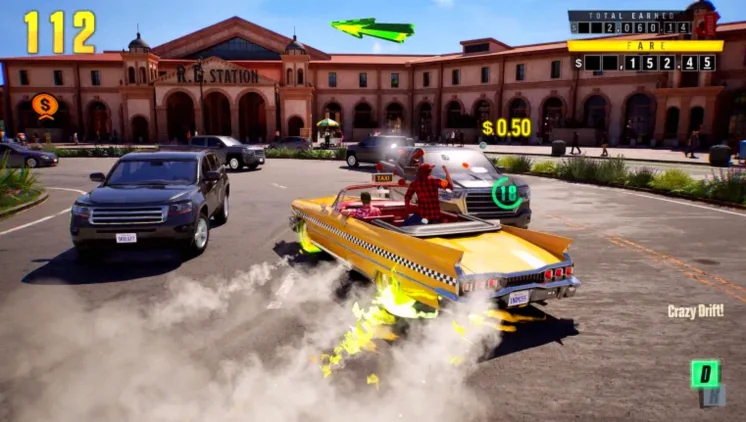
AI debates are increasingly shaping how players judge new game announcements, and Crazy Taxi: World Tour became the latest flashpoint after its Steam page referenced generative AI. Following the controversy, series creator and lead producer Kenji Kanno and SEGA clarified where AI was actually used—and emphasized that the final game content is original.
From Xbox reveal to Steam controversy
The next Crazy Taxi entry drew major attention when it was announced during the Xbox Summer Showcase, bringing longtime fans back to the idea of a modern take on the iconic arcade passenger-delivery series. But shortly after the reveal, a Steam listing disclosed that the development team used generative AI, which triggered backlash and skepticism.
In response, SEGA provided an expanded explanation. The company said generative AI was available as an optional support tool for developers, intended to help teams focus more on creative work. SEGA also stated that no AI was used in relation to the performers in the game.
The revised statement narrowed the scope further: generative AI was used to support the creation of background assets for Crazy Taxi: World Tour, and any AI-generated assets would still be reviewed by the development team.
Kenji Kanno: AI as an ideation hint, not the final work
Even with SEGA’s spokesperson clarification, the explanation reportedly remained too vague for the producer’s standards, prompting a direct follow-up with Kenji Kanno, the series creator and lead producer for the upcoming revival.
Kanno characterized generative AI as a small component within the creative process. He explained that World Tour’s design work involves artists and designers visiting real locations across five different countries to gather references, then turning those references into the game’s designs. In that workflow, Kanno said AI is used as a hint or tool for ideation.
Crucially, Kanno also addressed the concern that players might be worried about end-to-end AI authorship. He emphasized that the team wants to create things themselves, and that everything in the final product is expected to be original.
What comes next for the franchise
Despite the controversy, Crazy Taxi: World Tour is positioned as a faithful modernization of a franchise many associate with the Dreamcast era. The game is set to launch in 2027 on PS5, Xbox Series X/S, Switch 2, and PC.
For now, the key takeaway from the clarifications is that AI use—at least as described by SEGA and Kanno—was limited to background asset support and ideation assistance, with human review and original final content emphasized. Whether players accept that framing will likely hinge on what the game ultimately looks like once it arrives.
Key points
- SEGA says generative AI was used as an optional support tool during World Tour development.
- AI support was tied to background assets, with human review, and no AI involvement for performers.
- Kenji Kanno describes AI as a small part of ideation alongside artists visiting locations for references.
- Kanno stresses the final product will be original despite the controversy.
Confirmed details from SEGA and the producer
| Topic | What was clarified |
|---|---|
| Purpose of AI | Support tool to help developers focus on creative tasks |
| Where AI was used | Support for development of background assets |
| Human review | AI-generated assets were subject to review by the development team |
| Performers | No AI was used in reference to the game’s performers |
Expert View
This story signals how quickly AI disclosures can shift from a technical detail to a community trust issue. For established franchises like Crazy Taxi, the burden isn’t just whether AI was used, but how clearly the studio defines the boundaries between tool-assisted work and end-to-end AI creation. By narrowing AI’s role to ideation and background asset support—and by stressing original final content—SEGA and Kenji Kanno are trying to protect both brand legacy and player confidence. In the wider market, the takeaway is that vague Steam language can spark controversy, while specific workflow explanations are increasingly becoming the standard players expect.
FAQ
What did the Crazy Taxi: World Tour Steam page claim about AI?
The Steam listing indicated the development team used generative AI, which led to controversy among players.
How did SEGA clarify its use of generative AI for Crazy Taxi: World Tour?
SEGA said generative AI was an optional support tool used to help with background assets, with AI-generated assets reviewed by the development team, and no AI used regarding performers.
What did Kenji Kanno say about how AI fits into the creative process?
He described generative AI as a small part of ideation—used as a hint—alongside artists and designers who gather location references in multiple countries.
When is Crazy Taxi: World Tour scheduled to launch?
It is set to arrive in 2027 on PS5, Xbox Series X/S, Switch 2, and PC.