Ethan Crossfield
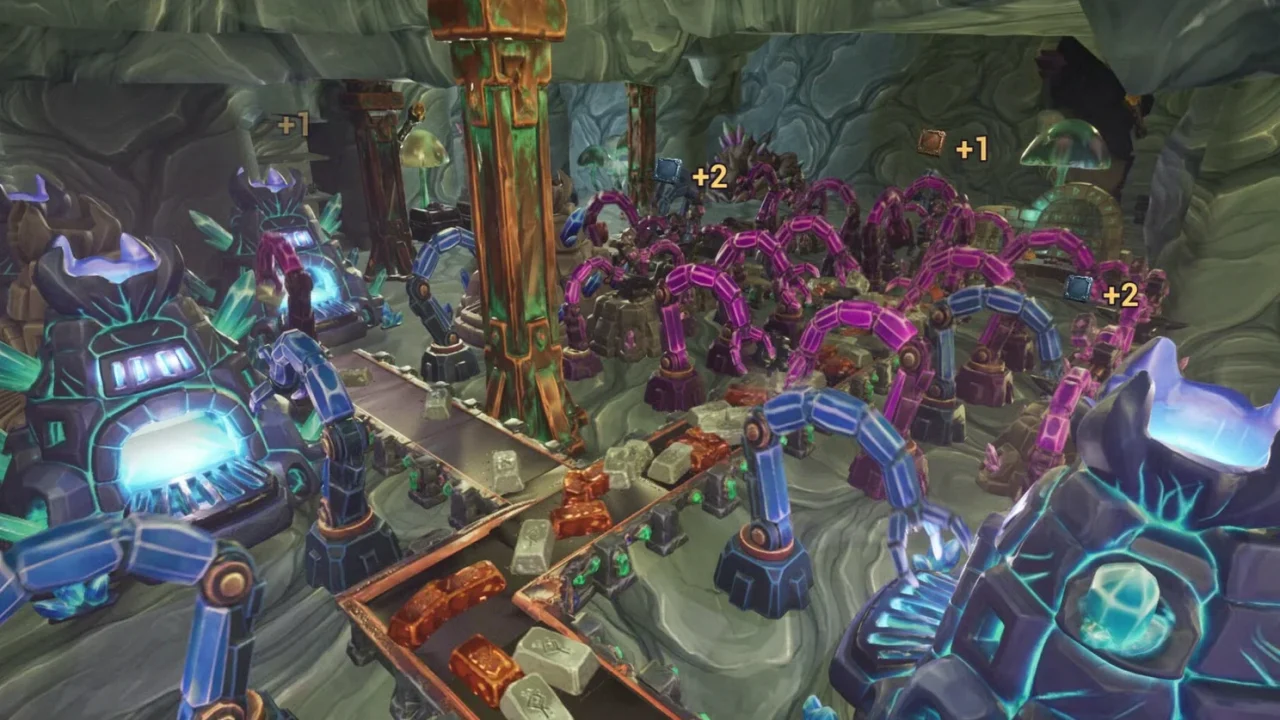
Mithril is positioning itself as a new sci-fi automation game for Steam players who want more than efficient factory lines. Its core idea combines first-person mining in unstable alien caves with pipelines, processing systems and hostile creatures, creating a clear overlap with Deep Rock Galactic while pursuing the systems-heavy appeal of Satisfactory. A playable demo is already available, though several major features are being held back for the full release.
What happened: Mithril enters the crowded automation race
Mithril has been revealed as an underground-focused automation game set inside procedurally generated caves on an alien world. Players mine resources directly from the environment, then build connected industrial systems to move, process and store those materials. The game supports solo play and is planned to include four-player co-op at launch, giving it a more social structure than many factory-building projects.
Its underground setting is central to the pitch. Rather than treating caves as static maps, Mithril simulates geological conditions and material behavior. Rock layers, mineral veins, crystal formations and cave structures can influence where players dig and how they approach extraction. Certain resources may need to be created through environmental interactions, including using heat from lava or redirecting water to concentrate minerals.
Why it matters: mining mistakes can reshape the mission
The strongest distinction in Mithril’s design is its emphasis on structural risk. Removing too much material without planning can trigger unscripted collapses, potentially destroying work in the surrounding area. Players are expected to reinforce ceilings with supports and think carefully about tunnel routes instead of simply carving a straight line toward the next resource deposit.
That pressure changes the role of automation. Pipelines can link crushers, furnaces, conveyors, storage and mechanical ore-handling equipment into larger supply chains, reducing the need for repeated manual hauling. But industrial expansion also has to coexist with the cave’s physical limits. The result could appeal to players who enjoy production optimization but want their factory decisions to have immediate environmental consequences.
Combat adds another complication. Alien creatures periodically attack miners, who can use a gauntlet for close-range strikes and projectile attacks created from transformed rock. The full game is also expected to introduce enemies that remember previous player tactics and base locations, making later assaults harder to predict.
What to watch next: launch details and missing demo systems
The current Steam demo offers mining, cave-in hazards and a Dormancy mechanic that rapidly advances cave changes over an enormous span of time. However, it does not include co-op or the enemy Memory system, so it is not a complete representation of the planned launch experience.
Players should also note an inconsistency in the available release information: one feature listing points to December 8, while another passage identifies December 6. Until the Steam store page or developer provides a final clarification, the release date should be treated cautiously. The full version is also set to include Freeplay, a mode that removes hostile creatures for players who want to focus entirely on building and experimentation.
Mithril’s use of generative AI in much of its art and audio may also become part of the conversation. The developer distinguishes those assets from the handcrafted world-generation, animation and gameplay systems.
Key takeaways for prospective miners
- Try the demo for its cave physics and Dormancy system, but do not expect co-op or adaptive enemies yet.
- Plan tunnels and ceiling support early, since over-mining can cause destructive cave-ins.
- Expect factory-building tools such as conveyors, furnaces, crushers, pipelines and storage.
- Freeplay is intended for players who want a hostile-free automation sandbox.
- Watch for confirmed launch-date information, as the supplied release details conflict.
Expert View
Mithril’s opportunity is not merely to resemble two popular games at once. Its success will depend on whether cave instability meaningfully complicates automation without turning every build into tedious damage control. If the co-op, adaptive-enemy and geology systems work together at launch, it could offer Steam’s factory audience a more physical, unpredictable alternative to traditional production sandboxes.