Ethan Crossfield
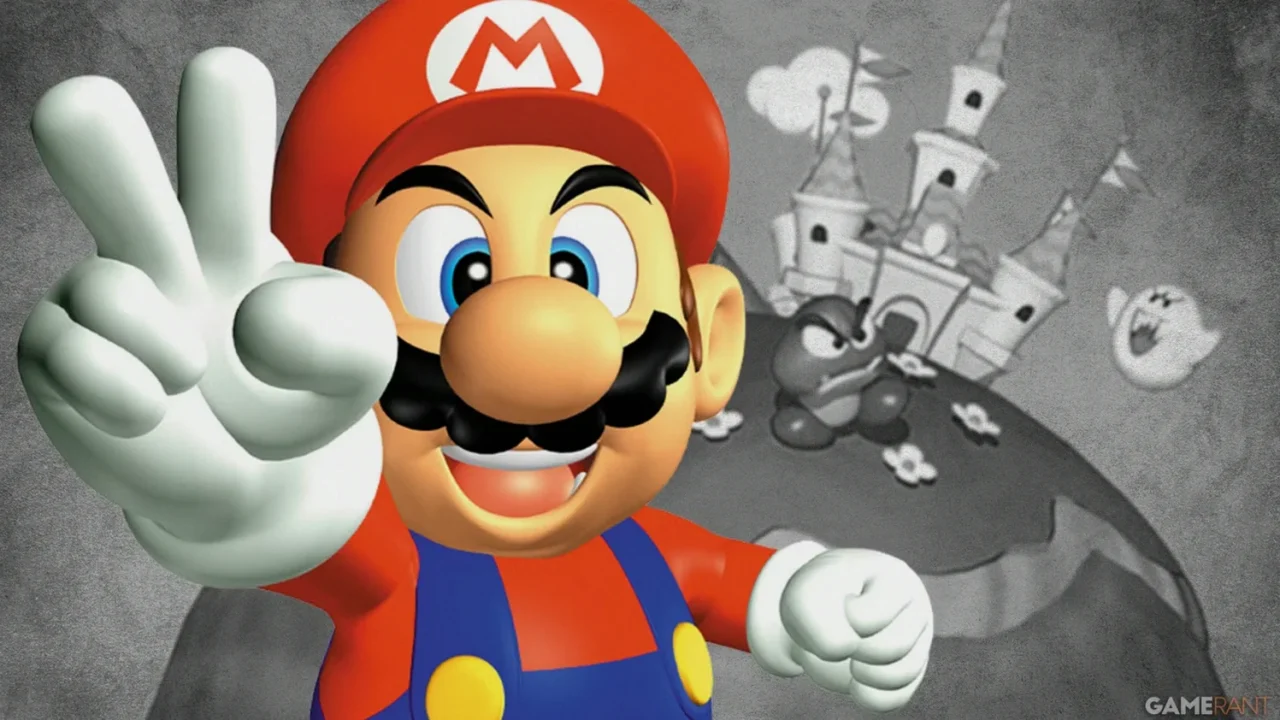
One of gaming’s most persistent rumors has received its strongest rebuttal yet. A fan’s reconstruction of the blurred plaque texture in Super Mario 64’s Castle Courtyard suggests the inscription does not hide instructions for unlocking Luigi, but instead carries a message about the game’s lasting legacy.
What happened to the Castle Courtyard plaque
Reddit user SpeekSecure said they deciphered the tiny, heavily distorted lettering on the star statue by rebuilding its texture at a 32×32 resolution, approximating the constraints under which the original in-game asset was likely made. The effort reportedly used Claude Opus 5.5 to assist with recreating the canvas before reducing it to the low-resolution format. The resulting reading identifies the first line as “Eternal Star” and the second as a hopeful continuation rather than a coded gameplay clue. That interpretation directly challenges the famous claim that the plaque said “L is Real 2401.”
Why the Luigi rumor mattered for decades
The supposed inscription became the foundation of a legendary schoolyard-era secret: collect every coin, meet a hidden requirement, and Luigi would become playable. No method ever proved the claim in the retail game, but the theory endured because Super Mario 64 has long invited close inspection. Its status as Mario’s first fully 3D adventure, alongside years of rumors, creepypastas, and strange details such as Big Boo’s Haunt’s piano scare, kept fans returning to its smallest assets for hidden meaning. Prototype evidence later showed that Luigi existed during development, including old Space World footage and files found in prototype source code. However, neither finding demonstrated that he remained accessible in the final release.
What to watch next in the debate
The new reading is unlikely to erase the myth’s cultural value. “L is Real” helped define the early internet’s fascination with video-game secrets, and it remains an important part of Super Mario 64 fandom even if it was never a real unlock condition. Fans may continue to examine the reconstruction method and compare it with the original texture, particularly because “Eternal Star” had already been a popular partial reading. The newly identified second line is the more consequential piece: it frames the plaque as a sincere message about endurance, not an instruction concealed in plain sight. Three decades of discussion arguably make that message fitting.
What fans should take away
- There is still no evidence that Luigi can be unlocked in the final retail version of Super Mario 64.
- Luigi’s presence in development materials does not confirm that he was playable at launch.
- The plaque appears to be a commemorative message rather than a collectible-based puzzle.
- The rumor remains a major piece of retro gaming culture, even if its central claim has weakened.
Expert View
This is less a disappointing end to a secret than a useful correction to gaming history. The Luigi myth survived because it sat at the intersection of genuine development evidence and unreadable low-resolution art. A clearer plaque reading does not diminish Super Mario 64’s mystique; it explains why the game’s legacy outlasted the rumor built around it.