Ethan Crossfield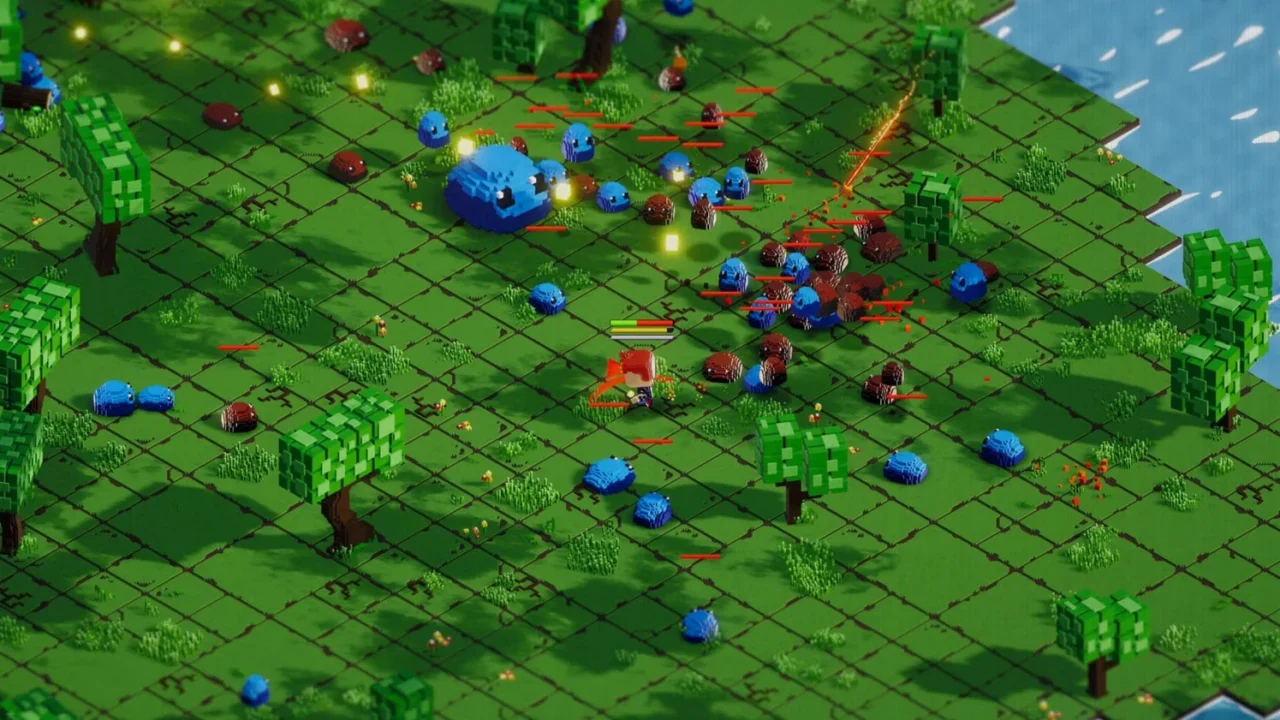
Voxie Survivor is shaping up as a distinctive new PC action roguelike, combining the blocky visual language associated with Minecraft and the escalating projectile combat popularized by Vampire Survivors. Developed by AlwaysGeeky Games, it aims to add more deliberate movement, story progression, and build experimentation to the familiar survival formula.
What Happened
The upcoming game drops players into battles against swarms of skeletons, zombies, slimes, mushrooms, and other voxel-inspired enemies. Its characters and combat arenas use a strongly cubic aesthetic, although the entire world is not made exclusively from square shapes. The visual direction gives Voxie Survivor an immediate identity while keeping its combat readable during crowded encounters.
Its core loop follows the bullet-heaven template: players automatically fire weapons while navigating large enemy groups, collecting upgrades, and building increasingly powerful combinations. A critical-hit system creates opportunities for sudden damage spikes, while a responsive dodge lets players reposition and exploit openings instead of simply running in circles.
Why It Matters
Vampire Survivors demonstrated how accessible controls, fast progression, and meaningful build choices can support a highly replayable game. Voxie Survivor appears to understand that copying the surface-level formula is not enough. It adds a story that advances across individual runs, with rescued allies and environmental clues contributing to a larger mystery.
Build variety is another major focus. The game is planned to feature 45 weapon pairings, including bouncing blades that ricochet through enemies and attacks that slam the ground beneath the player. Weapon cards can change the central element of a run, encouraging players to adapt rather than follow one fixed setup. Between sessions, cores and shards collected from tougher enemies will support permanent upgrades alongside temporary run-based improvements.
The enemy design could also separate Voxie Survivor from simpler entries in the genre. AlwaysGeeky Games says opponents will react to player movement and navigate around environmental obstacles. Apex bosses, including a giant dragon reminiscent of Minecraft’s Ender Dragon, are intended to turn late-run encounters into more demanding tests of positioning.
What to Watch Next
The most immediate point of interest is how the game balances its approachable presentation with the promised tactical depth. A simple visual style and familiar autoshooting structure may attract Vampire Survivors fans, but reactive enemy behavior, dodging, and weapon rerolls will need to work together without making runs feel chaotic for the wrong reasons.
Steam Deck support is another useful advantage. Voxie Survivor is expected to be Steam Deck verified when it launches on Steam, giving it a natural home on a platform where short, repeatable sessions have helped similar games thrive. Players can already try the free demo, while feedback has included requests for a dash option because of the speed and lethality of the enemies. Pricing remains unconfirmed.
Key Takeaways for Players
- The game is coming to PC through Steam, with Steam Deck verification planned at release.
- Its combat combines automatic projectile attacks with critical hits and a responsive dodge.
- There are 45 advertised weapon pairings, plus mid-run weapon-card changes.
- Story progress, rescued allies, and environmental clues carry across individual runs.
- A free demo is available, but the full game’s release date and price have not been stated.
Expert View
Voxie Survivor has a credible hook because its Minecraft-like presentation is paired with systems that address common weaknesses in lightweight Survivors-likes. The combination of permanent progression, narrative discovery, reactive enemies, and a strong Steam Deck focus gives it more to prove than visual resemblance alone. Its success will depend on whether the 45 weapon pairings create genuinely different strategies and whether the dodge-and-crit mechanics add decision-making without undermining the genre’s pick-up-and-play appeal.