Ethan Crossfield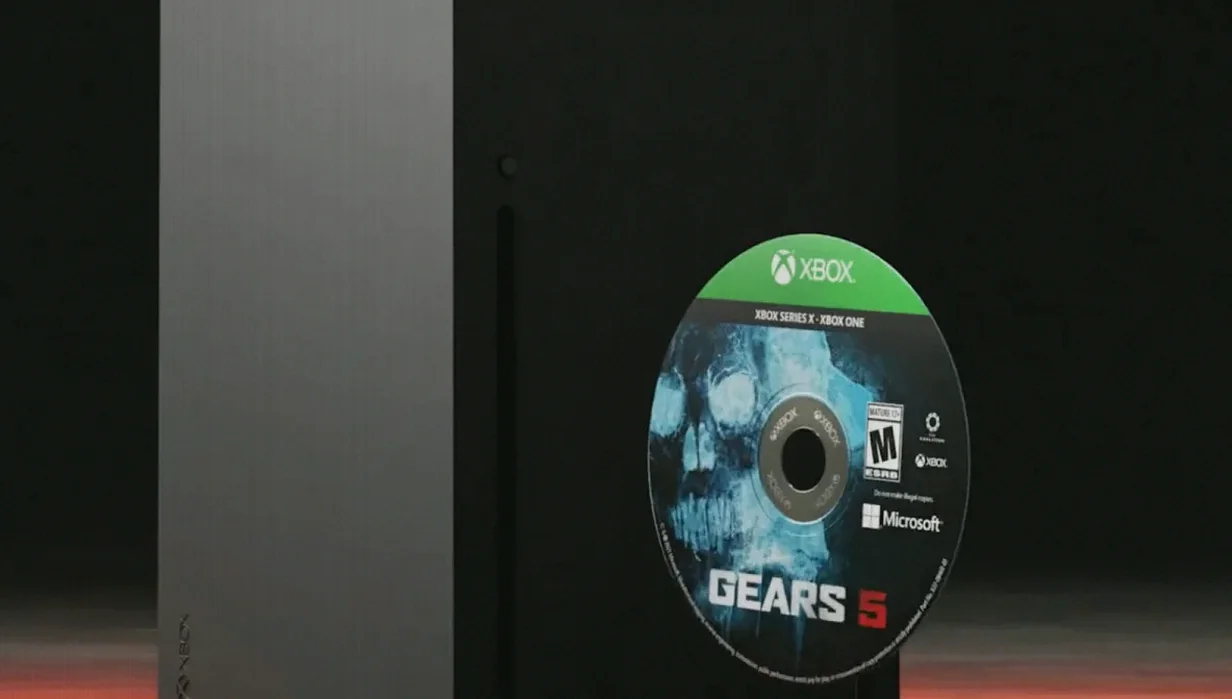
Physical media remains an important part of game ownership, even as platform holders expand digital libraries, cloud services, and cross-device play. Xbox is now bridging those two models: its disc-to-digital program has moved beyond Xbox Insider testing and is available to all Xbox owners.
How Xbox’s Disc-to-Digital Program Works
The process is straightforward. Insert an eligible Xbox Series X or Xbox One game disc into an Xbox console, and the system grants a digital license connected to that physical copy. The game can then be downloaded and treated as part of the player’s digital library. A physical copy of Gears 5 is one example of how the system works: inserting the disc unlocks the corresponding digital version.
The upgrade does not replace the disc or make it unusable. Players can continue using the original game disc normally after the digital license has been created. However, the license is not independent ownership that can be separated from the physical copy.
The Disc Still Matters
Xbox’s support guidance makes possession of the qualifying disc a condition of the benefit. If a player loses, sells, gives away, or otherwise stops possessing that disc, access to the associated disc-to-digital license may be restricted or revoked.
That distinction is important for anyone treating the feature as a permanent conversion from physical ownership to digital ownership. The program provides digital convenience while the player retains the eligible disc; it does not appear to create an unrestricted license that remains available after the disc leaves the owner’s possession.
Why the Digital Upgrade Matters
The main advantage is flexibility. Once an eligible disc has been used to establish its license, players can access the digital version through the benefits associated with Xbox’s digital ecosystem. That includes playing an owned title across supported platforms through Xbox Play Anywhere, as well as using Cloud Gaming where the game and service support it.
This gives physical game owners a way to benefit from features that are usually associated with digital purchases, including broader access across Xbox devices and PC. The exact experience still depends on the game’s eligibility and the relevant Xbox service.
A Preservation Statement With Practical Limits
Xbox has presented the initiative as part of its wider position that preserving access to games matters as technology, hardware, and distribution models change. Making a physical copy usable within a digital ecosystem supports that argument, particularly for players who want to keep using older purchases as their preferred way to play evolves.
At the same time, the disc requirement shows the limits of the approach. The program adds convenience without fully separating a game from its original physical media. For players, that makes keeping qualifying discs safe essential—even after the digital version has been downloaded.
Key points
- The program is now available to all Xbox owners, following its Xbox Insider rollout.
- Eligible Xbox Series X and Xbox One discs can unlock matching digital licenses.
- The original disc remains usable after the digital version is added.
- Selling, losing, or giving away the qualifying disc may limit or revoke the license.
What the program changes
| Item | Confirmed detail |
|---|---|
| Eligible media | Most Xbox Series X and Xbox One physical discs, subject to game eligibility |
| Digital access | The associated digital version can be added to the player’s library |
| Physical copy | The original disc continues to function normally |
| Ownership condition | The player must retain possession of the qualifying disc |
Expert View
This is a meaningful quality-of-life feature rather than a complete replacement for physical ownership. Xbox is acknowledging that players want both the permanence of discs and the convenience of digital services, while preserving a clear connection between the two. For the wider market, that approach could help reduce friction as console ecosystems become more cross-platform and cloud-focused. It also gives Xbox a stronger preservation message without asking physical game owners to abandon the media they already purchased.