Ethan Crossfield
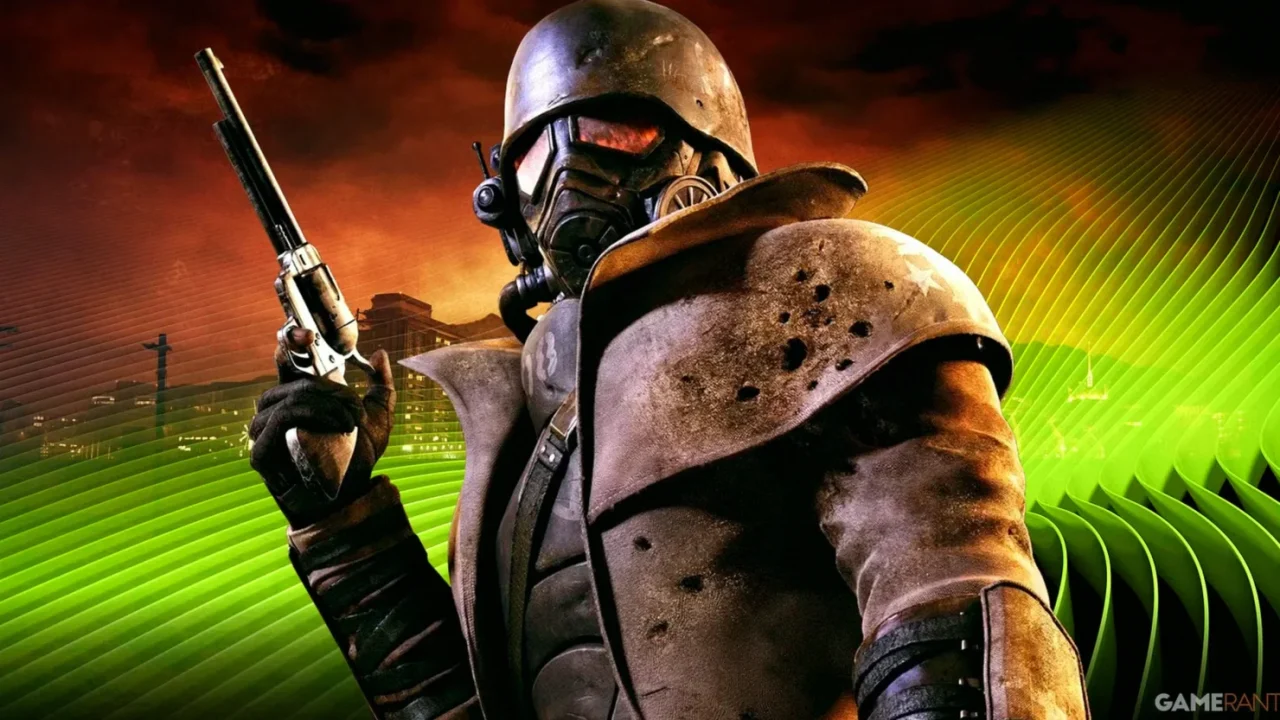
Community-led visual overhauls are increasingly filling the gap between classic PC games and modern rendering standards. Fallout: New Vegas is the latest major example: New Vegas RTX is now available, using heavily modified RTX Remix technology to transform the Mojave with a new renderer, full path tracing, modern upscaling, and broader lighting changes.
A difficult project for a sprawling RPG
RTX Remix has already shown its potential in projects based on Portal and Half-Life 2, but Fallout: New Vegas presents a different scale of challenge. Its large open world, extensive mod ecosystem, and aging technology make a straightforward visual conversion difficult. Modder Kim2091 reportedly spent months adapting RTX Remix specifically for the game, creating a custom wrapper and an NVSE plugin that send scene data into the replacement renderer. The result is not simply a texture refresh; it is a substantial reworking of how New Vegas produces lighting and environmental effects.
Lighting, weather and water receive the biggest changes
New Vegas RTX makes the sun, moon, fire, lamps, neon, gunfire flashes, and the Pip-Boy operate as light sources within its path-traced setup. Light can bounce through locations more naturally, while shadows and reflections behave differently from the original game's lighting model. The mod also introduces a physically based sky, volumetric clouds, changing weather, path-traced water effects, underwater caustics, and support for parallax-enabled texture packs. Nights are notably darker, reinforcing the contrast between illuminated settlements and the Mojave's open spaces. DLSS, FSR, and XeSS are supported, alongside frame-generation options, because running path tracing at native resolution can be highly demanding.
Mod support matters, but early limitations remain
The project is designed to work alongside texture and mesh replacements, as well as many bug-fix and engine-focused mods. It can also identify weather types added by other mods and adapt its sky presentation accordingly. However, players should not expect universal compatibility. Competing renderers, ENB, ReShade, and other mods that alter the graphics pipeline can conflict with New Vegas RTX. The creator still considers the overhaul a work in progress: downloadable content has not been fully tested, some DLC weather settings need further work, and recent updates have targeted crashes, terrain issues, interface problems, performance, and AMD and Intel compatibility.
A high bar before Bethesda's official remaster
The timing is especially notable because Bethesda has confirmed that Fallout: New Vegas and Fallout 3 remasters are in development, although no release date, platform list, or detailed scope has been announced. New Vegas RTX therefore offers a community-built route to a dramatically modernized Mojave while retaining the original game experience. It also raises expectations for how far an eventual official remaster could push lighting, atmosphere, and technical presentation.
Key points
- New Vegas RTX adds full path tracing through a custom RTX Remix implementation.
- Its lighting system covers environmental, weapon, neon, fire, and Pip-Boy light sources.
- DLSS, FSR, XeSS, and frame-generation options are included for performance scaling.
- The mod supports many common replacements and fixes, but conflicts with some graphics mods remain.
Visual feature comparison
| Area | Original Fallout: New Vegas | New Vegas RTX |
|---|---|---|
| Lighting | Original lighting system | Full path-traced lighting and reflections |
| Sky and weather | Original presentation | Physically based sky, volumetric clouds, and changing weather |
| Performance tools | Not specified | DLSS, FSR, XeSS, and frame-generation options |
Expert View
New Vegas RTX demonstrates how mod communities are becoming a serious force in game preservation and technical modernization. Bethesda's eventual remaster may have the benefits of official support and wider accessibility, but this project shows that enthusiasts can already deliver ambitious renderer-level upgrades for beloved RPGs. For PC players, it is also a reminder that major visual improvements increasingly come with configuration choices, hardware demands, and mod-compatibility trade-offs.